
Monterey Car Week 2026 – Part 4: Pebble Beach Concours d’Elegance 2026 and Morgan Supersport
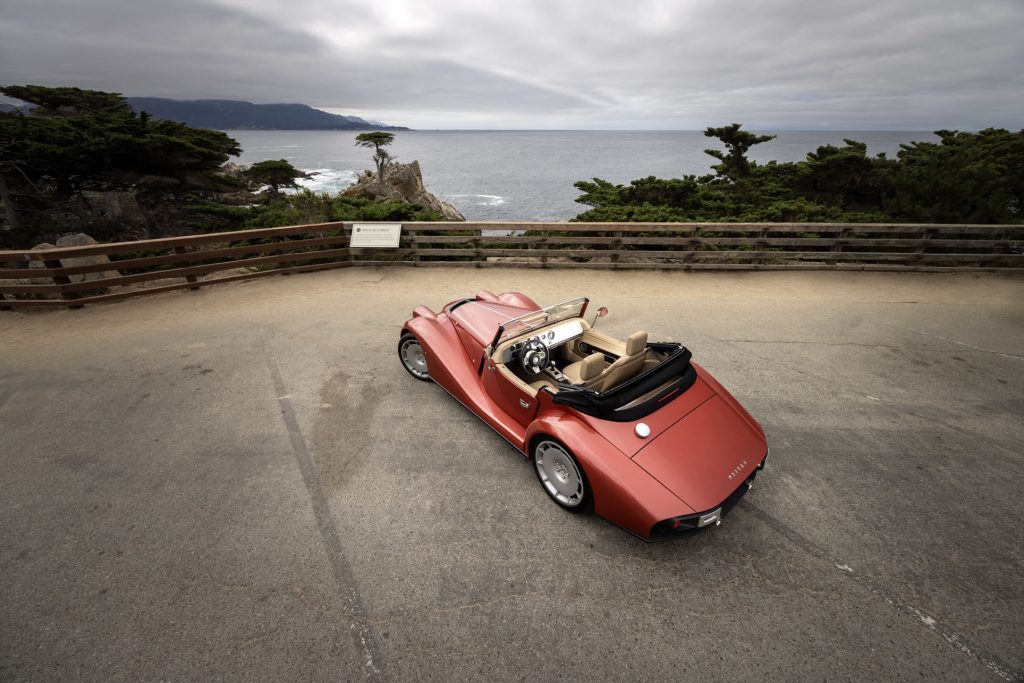
Morgan Supersport along the coast of California
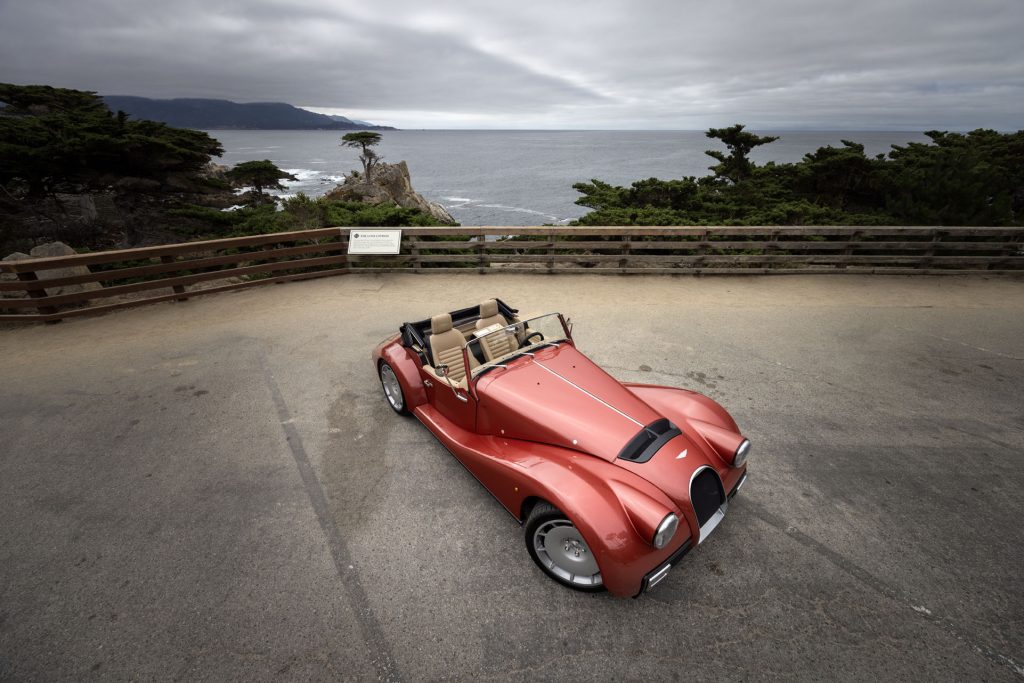
Before we move on to Sunday and Pebble Beach Concours d’Elegance 2026 shall we rewind the tape a day, to Saturday morning and my test drive of the Morgan Supersport.
Initially the plan was for me to drive a Morgan Plus Four during Monterey Car Week. However, I asked if there was any possibility of driving the new Supersport instead, since I had already driven the Plus Four when I visited the Morgan factory in Malvern ahead of Goodwood Festival of Speed 2025.
The initial response I received was that the Supersport Morgan had brought to Monterey would not be available for test drives. Therefore, I was both surprised and very pleased when Morgan turned up with not only a Plus Four, but also a Supersport.
I got the opportunity to drive both cars, but since I had booked appointments at Lamborghini House later in the day and already had experience of the Plus Four, the choice became pretty simple. I wanted to spend the time on the Supersport.
Classic Morgan with modern BMW technologyk
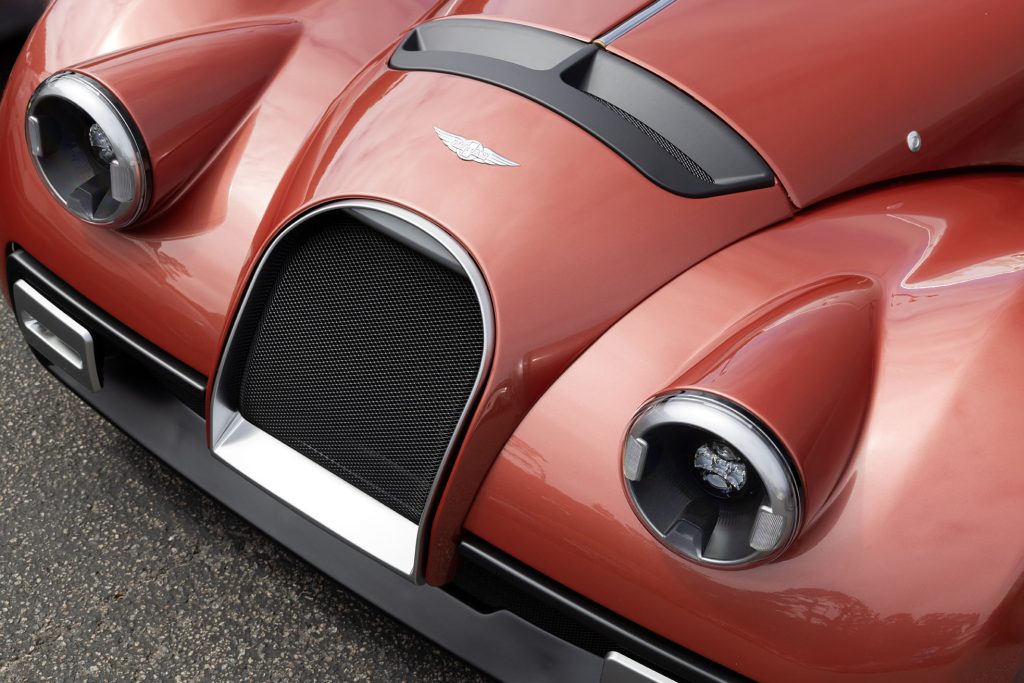
Supersport is Morgan's new flagship and is built on the brand's new bonded aluminium CXV platform. Under the long bonnet sits BMW's well-known 3.0-litre B58 TwinPower Turbo, an inline six that here delivers 335 hp and 500 Nm. The engine is coupled to an eight-speed automatic gearbox.
With a weight of around 1,170 kilograms, there is plenty of performance. 0 to 62 mph takes 3.9 seconds and the top speed is stated as 166 mph.
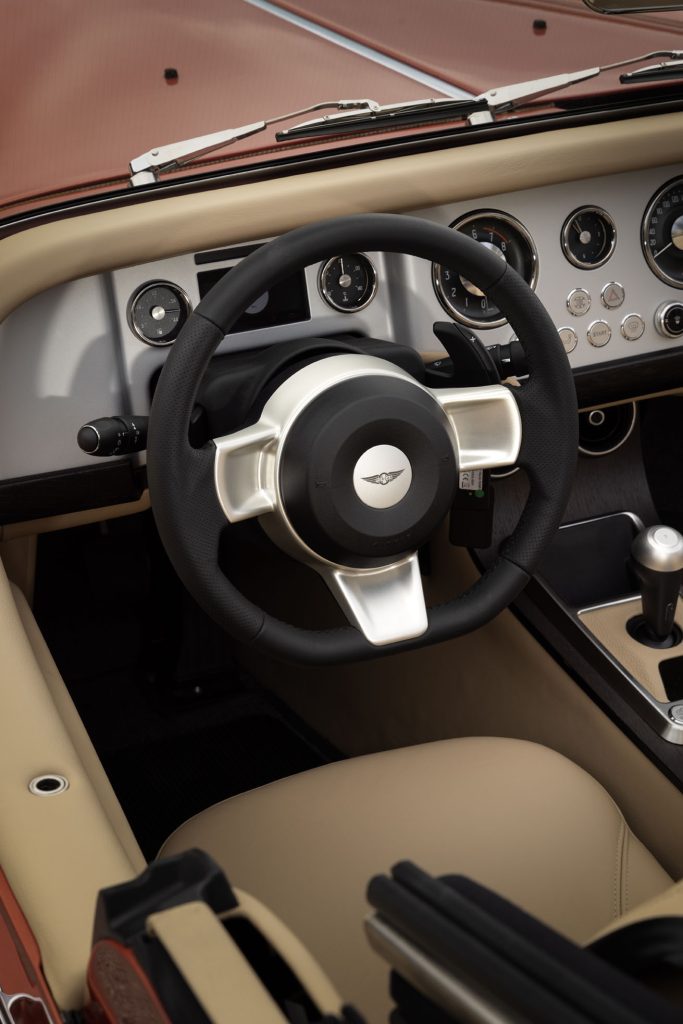
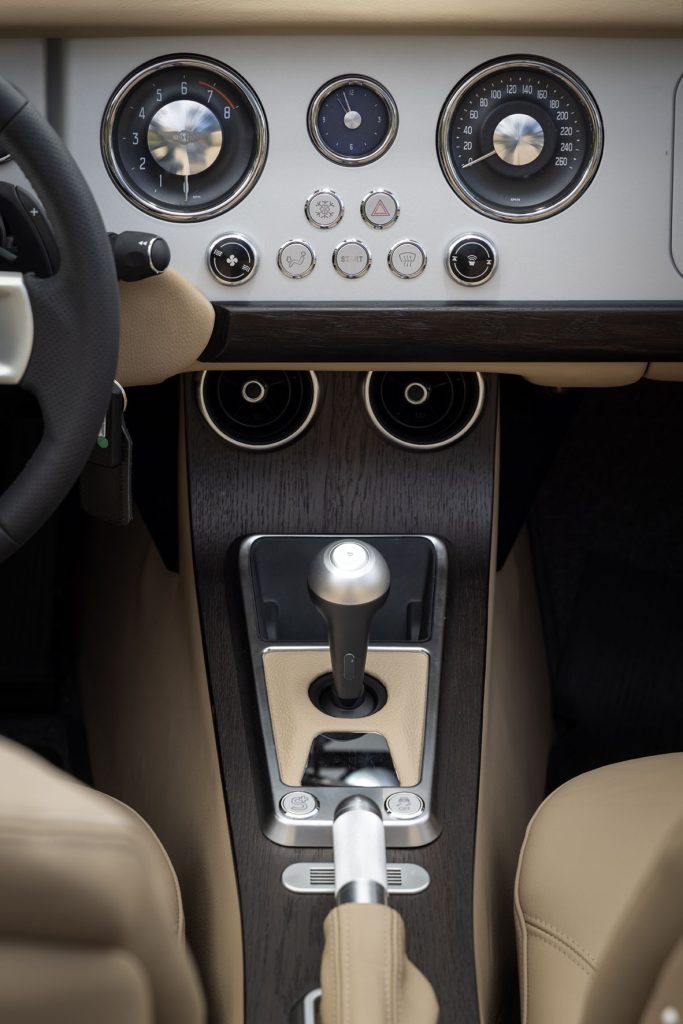
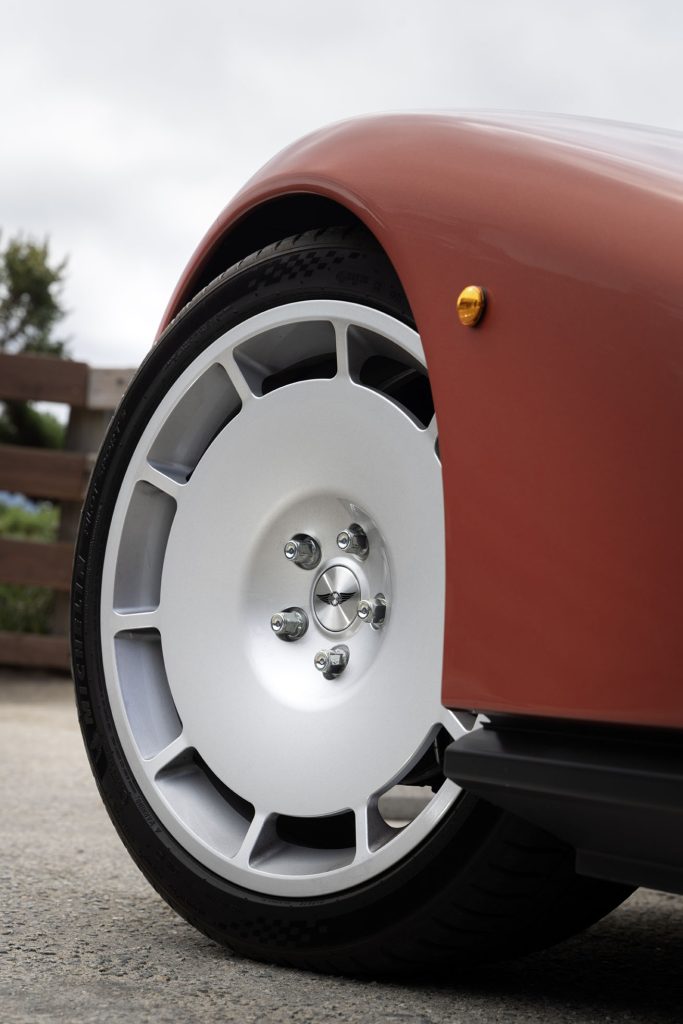
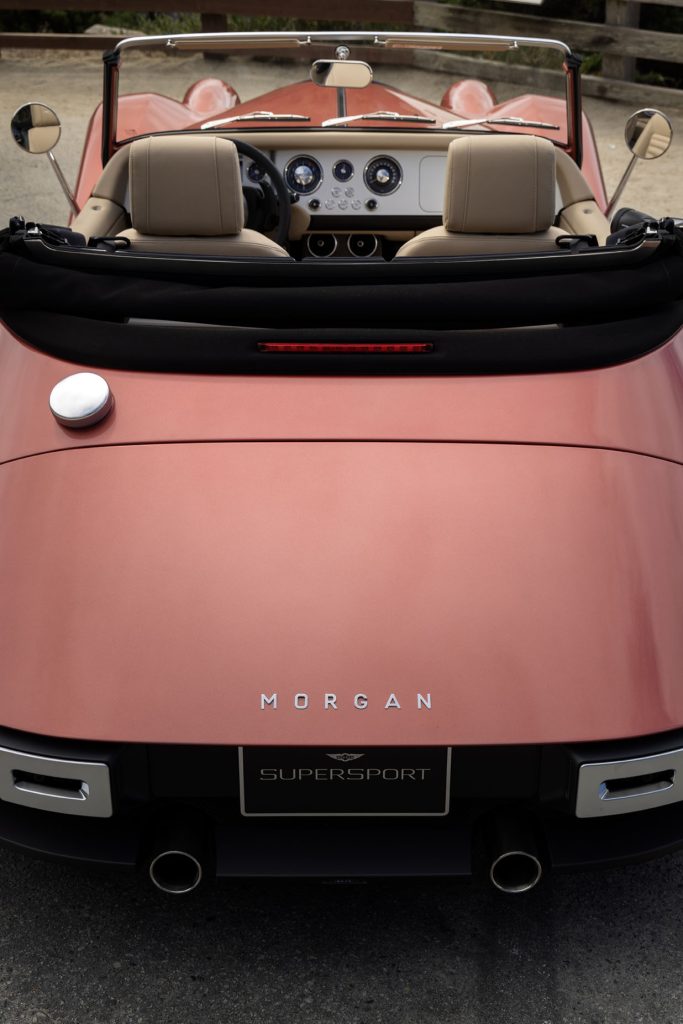
However, it is not really the figures that are the most interesting thing about the Supersport. Despite the modern technology, much of that special Morgan feel remains. You sit low down, the long bonnet stretches out in front of you and with the roof down, the contact with your surroundings becomes a major part of the experience.
Driving an open British sports car along the coast of California during Monterey Car Week is about as good as it gets. At the same time, the speed limit on many of the roads we drove on is only 25 mph, which naturally makes it difficult to truly explore what the car is capable of.
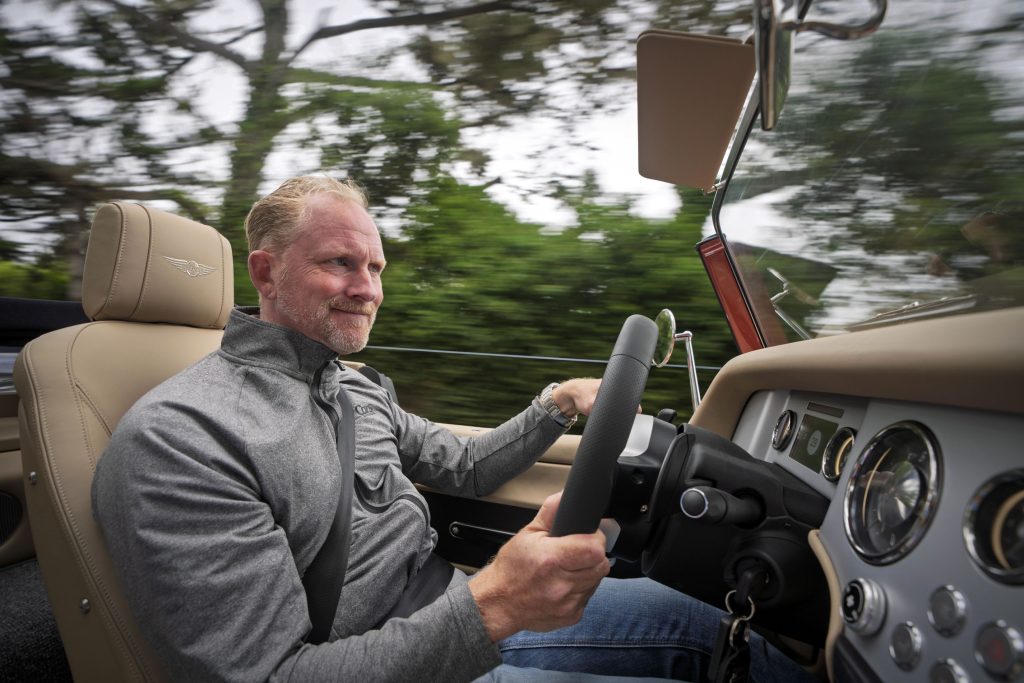
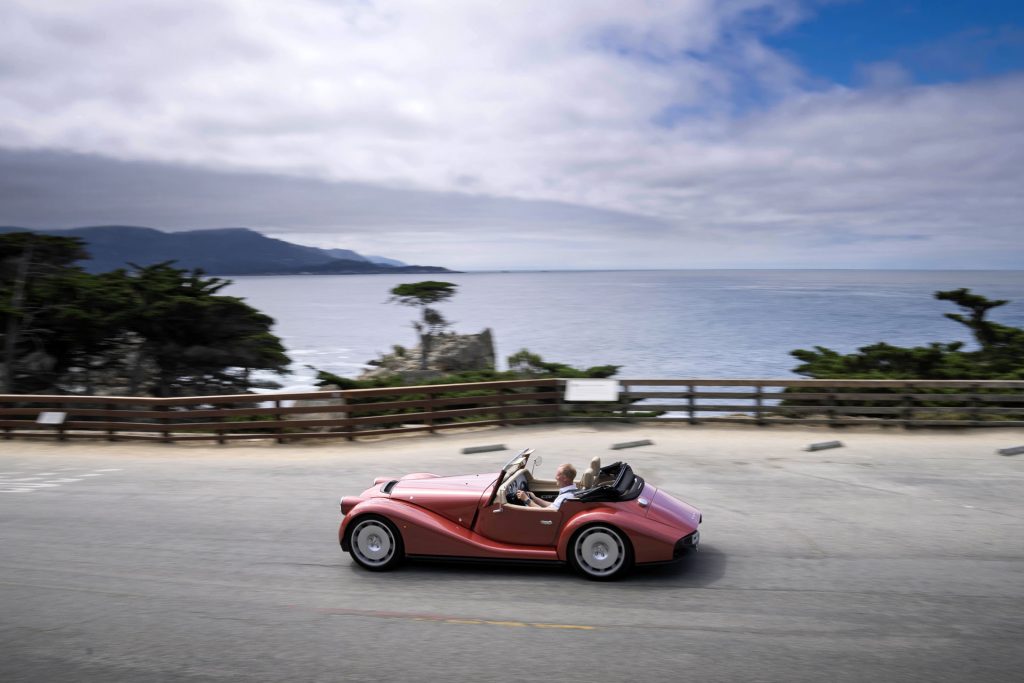
But maybe it doesn't matter all that much in a Morgan specifically. With the roof down, the sea beside the road and the straight BMW six-cylinder in front of you, it doesn't always have to go fast to be a good driving experience.
The test drive in Monterey therefore became more of a first meeting with the Supersport than a full test drive. I am already in contact with Ann at British Auto about the possibility of getting the car delivered at home in Sweden. Hopefully, I'll then be able to drive it on roads where I get the chance to get to know it properly and return with a more in-depth article.
In addition, Morgan had arranged for a photographer to come along during the test drive. We drove out to a nice spot along the coast where he photographed me with the car while I also had the opportunity to photograph the Supersport in the Californian setting.
When the photoshoot was finished, I got back behind the wheel and drove back to the car park. There, the next item on today's agenda was waiting, a shuttle that would take me on to Lamborghini House.
And what happened there you have already been able to read about in the previous part of my Monterey series.
Pebble Beach Concours d’Elegance 2026
The next morning it was time for Sunday and the grand finale of Monterey Car Week: the Pebble Beach Concours d’Elegance.
Slightly ironically, Pebble Beach was actually the only event during the entire week that I had confirmed accreditation for even before travelling to California. I had simply misunderstood how Monterey Car Week worked and hadn't realised that the various events required separate invitations or accreditations.
As those of you who have read the previous parts know, most things worked out along the way anyway and the week turned out to be considerably more eventful than I could have imagined.
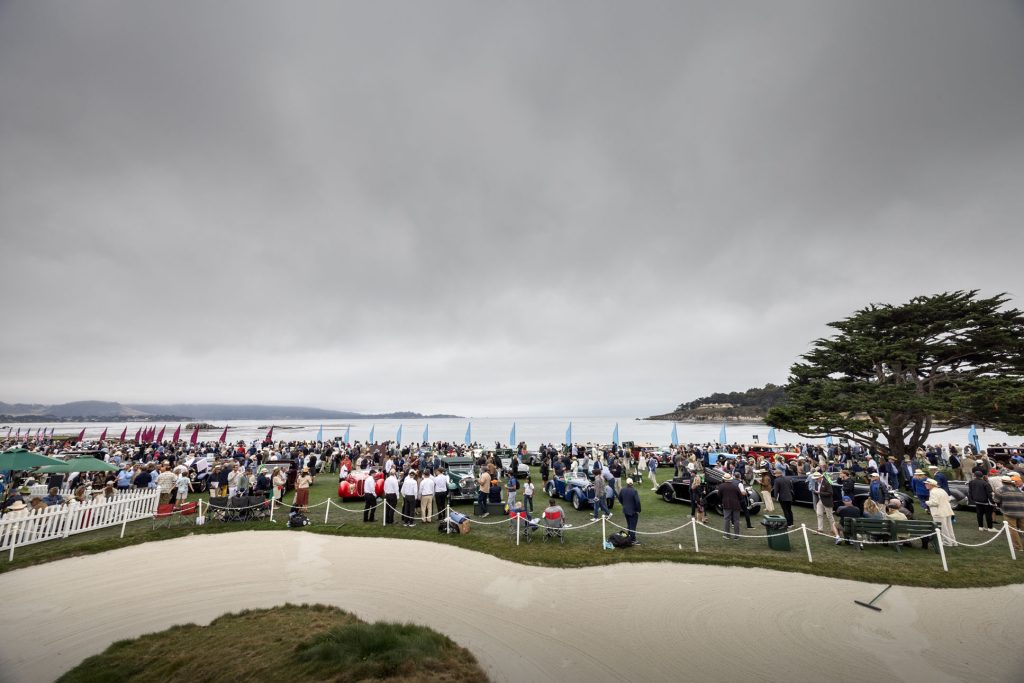
The Pebble Beach Concours d’Elegance 2026 celebrated its 75th anniversary this year. The show was first organised in 1950 and has since evolved into one of the world's most prestigious events for historic cars. This year, 218 cars from 14 countries gathered at Pebble Beach Golf Links.
When you come down the 18th fairway, you quickly understand why Pebble Beach has gained the status it has. With the Pacific Ocean as a backdrop, over a century of automotive history is gathered on the same lawn. It is not just the value or rarity that makes the cars special. Here are individual examples with histories, bodies and provenance that mean you constantly find something new to stop in front of.
Delahaye and the French coachbuilding art
One of the cars that was the absolute hardest to walk past was a spectacular red 1938 Delahaye 165 Cabriolet with coachwork by Figoni et Falaschi.
The Delahaye 165 is impressive even in photographs, but up close the proportions and details become even more extreme. The huge sweeping front wings continue along the body and almost enclose the wheels. There are very few straight lines and the car looks almost more sculpted than engineered.
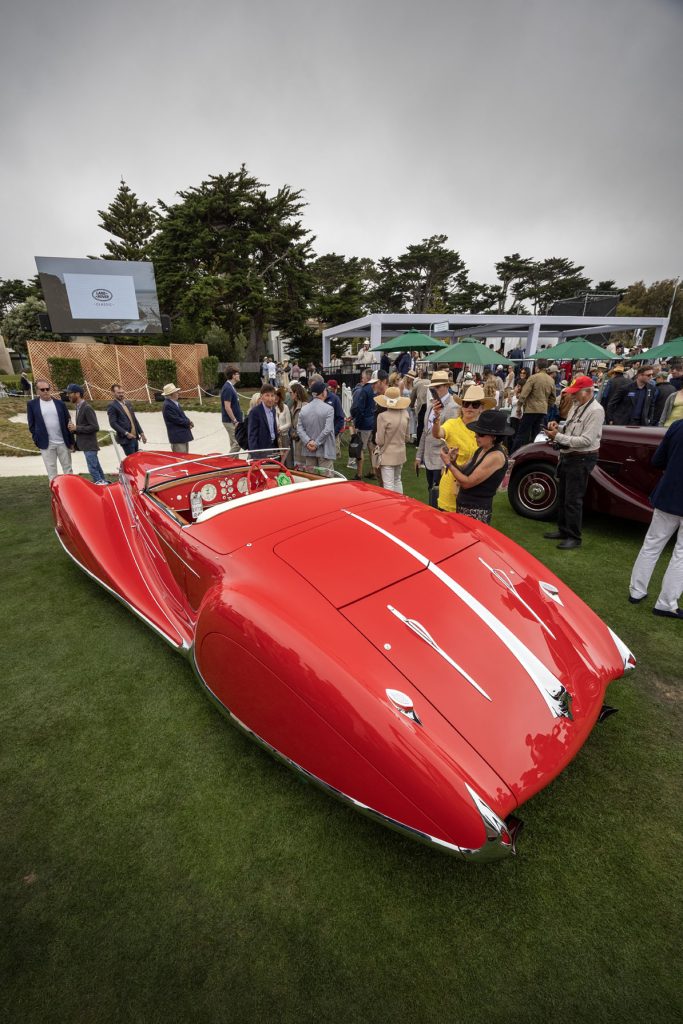
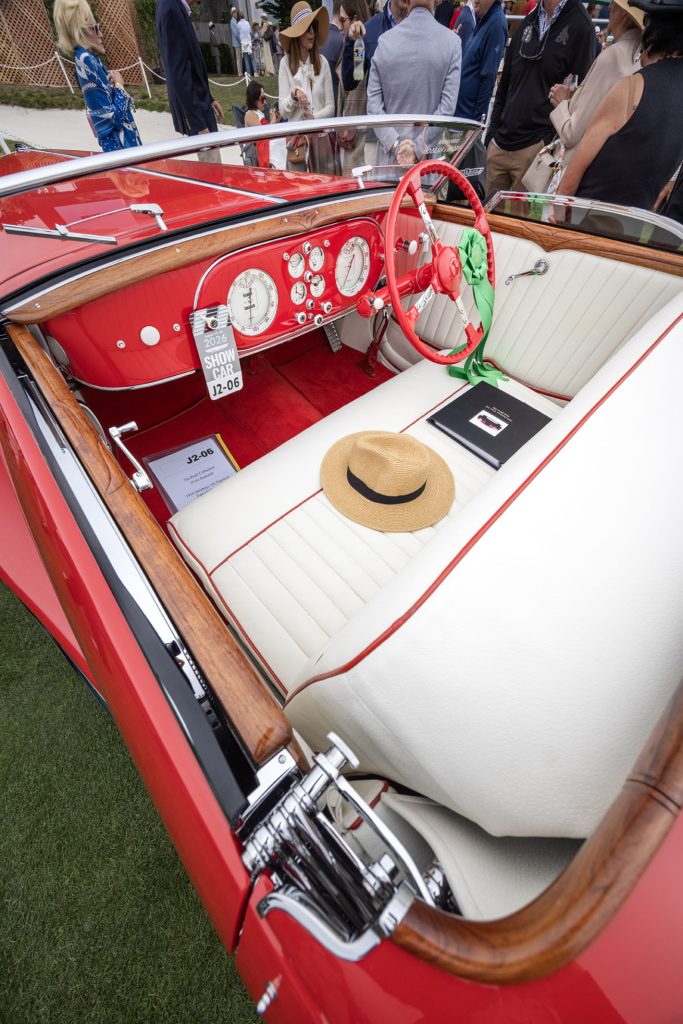
The very specimen I photographed also turned out to be one of the major winners of the year. It won its class and was one of only four cars nominated for Best of Show. The main prize ultimately went to a 1935 Duesenberg SSJ Special Speedster, a car originally owned by Hollywood star Clark Gable.
Bugatti
There were several fantastic Bugattis at Pebble Beach, and here it was truly possible to see the different cars that could be created around the Type 57.
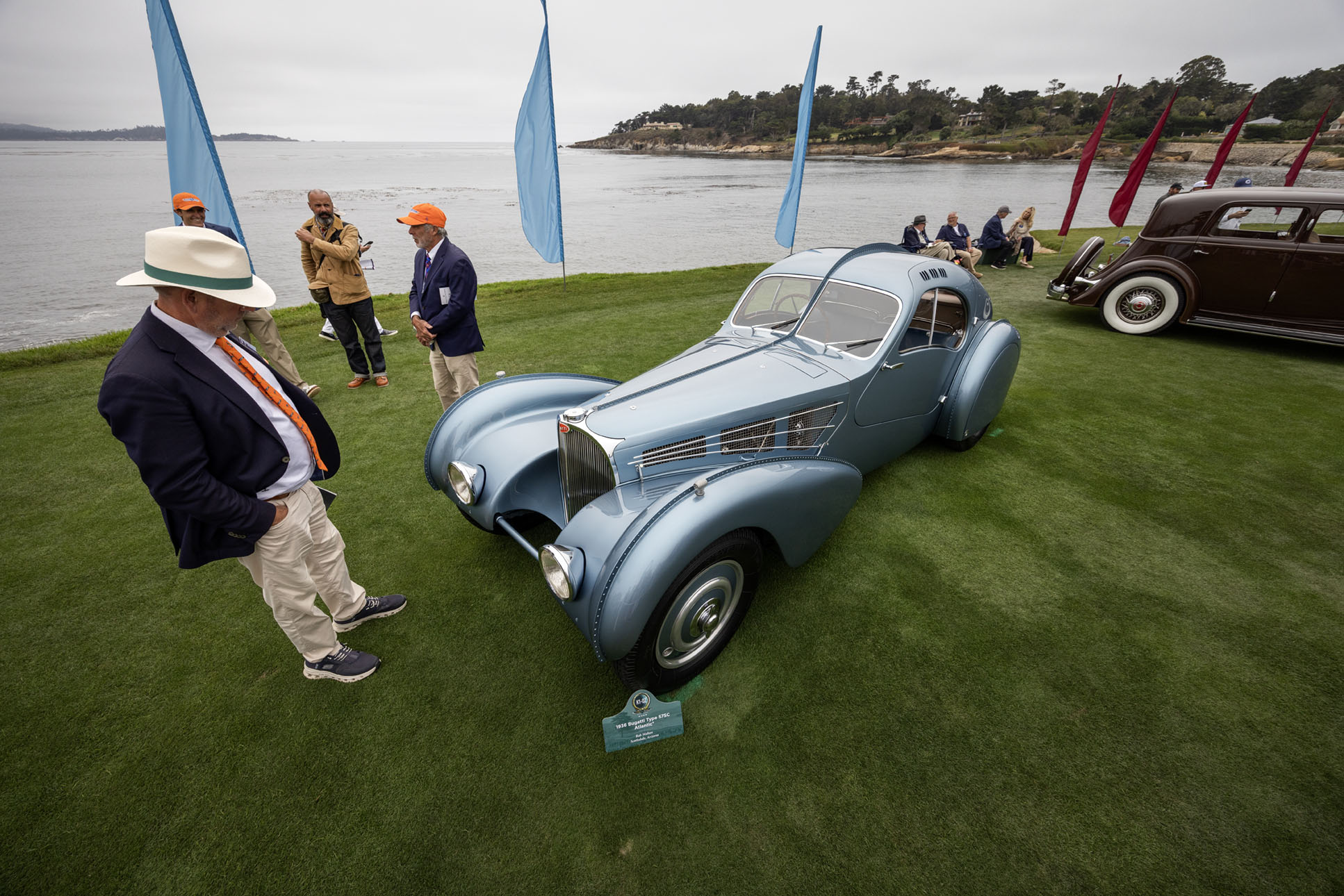
One of the ones I particularly fell for was a 1937 Bugatti Type 57S with a coupé body by Gangloff. Only three Type 57S chassis received bodies from Gangloff and this is the only coupé of the three. The long bonnet, low roofline and beautifully shaped rear make it look fast even when standing still.
At the same exhibition there was also a 1937 Bugatti Type 57SC Atalante, one of Jean Bugatti's most famous designs. The Atalante body is considerably more compact and sporty than the Gangloff body, but together the cars demonstrate the incredible breadth that existed within the Type 57 family.
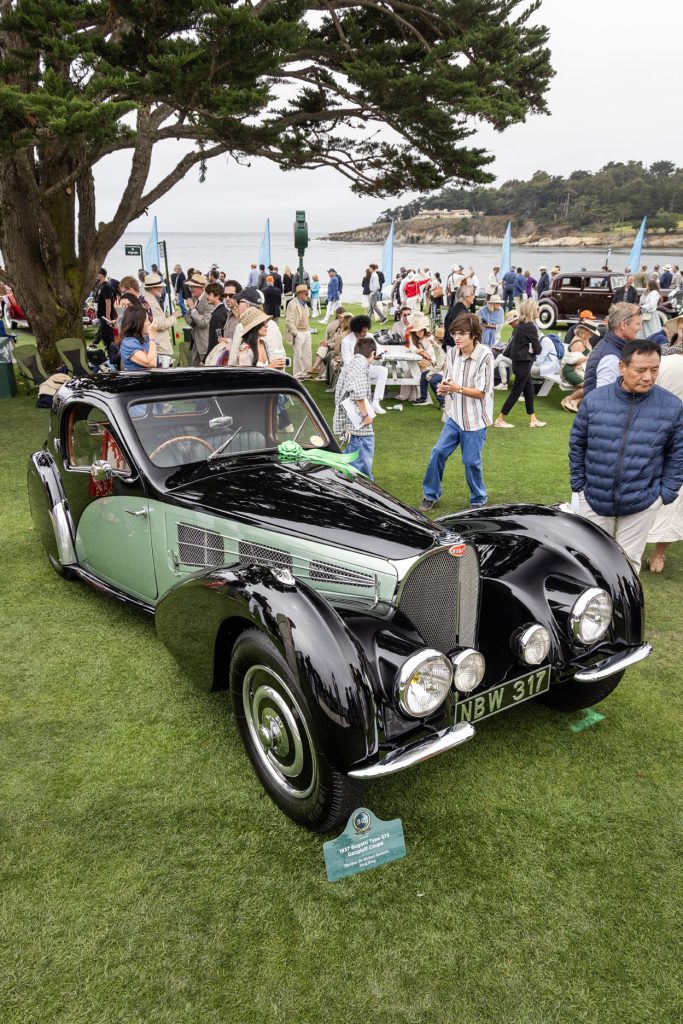
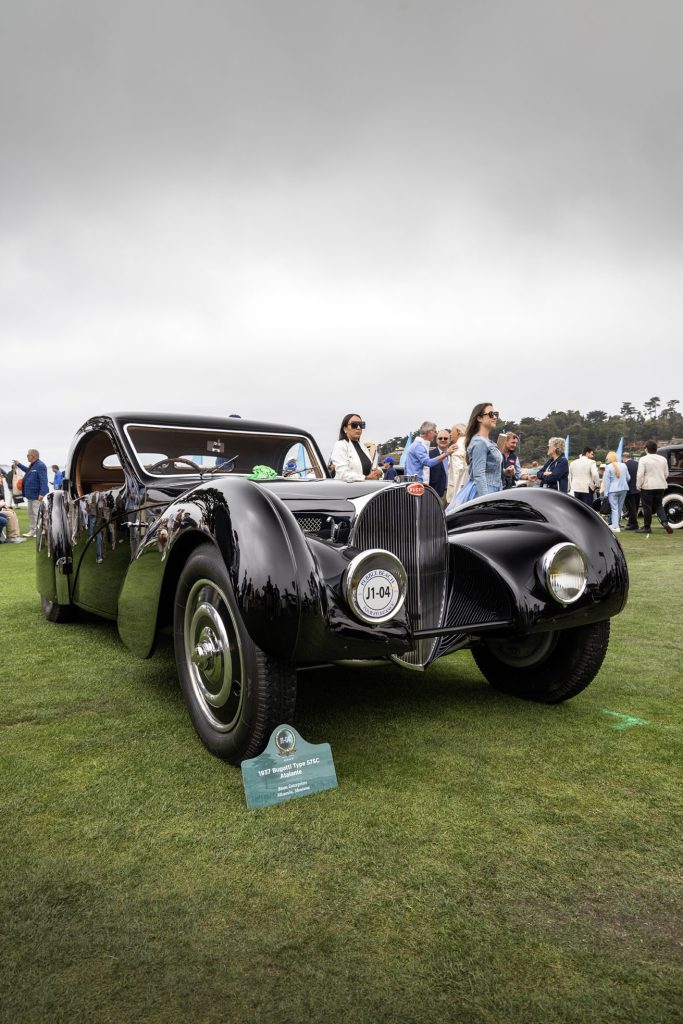
And it didn't stop at those two. Just a few metres away stood another two Bugattis from the same era, but with completely different bodies and characters. One with its long, light-coloured body and open cockpit, the other with a significantly more streamlined body in blue. Together, the four cars became a very clear example of the enormous variety that existed among classic Bugattis and how different the result could be depending on the coachbuilder and the client.
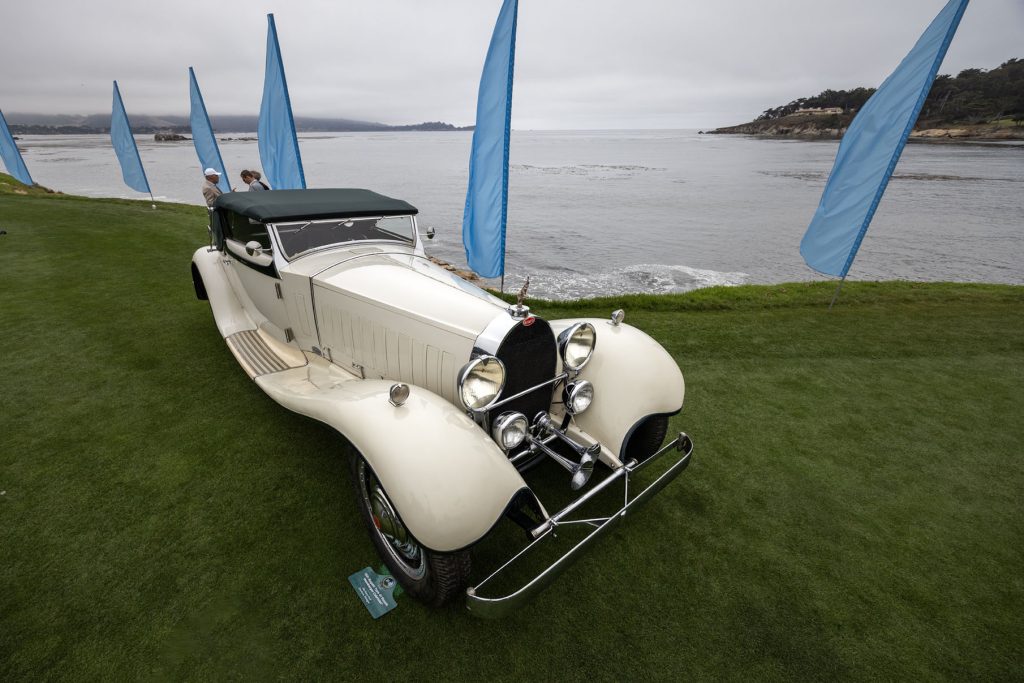
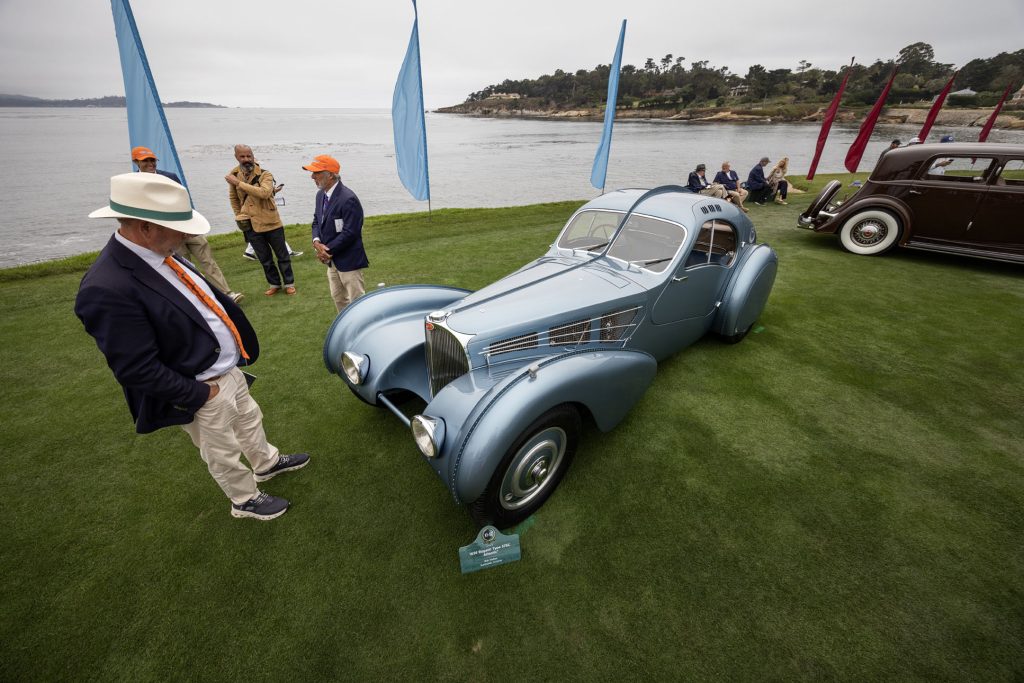
Being able to see four such different Bugattis gathered on the same small patch of grass is precisely the sort of thing that makes Pebble Beach special.
Rolls-Royce, from the brand's beginnings to Art Deco
The contrasts are a major part of Pebble Beach, and few examples demonstrate this better than two of the Rolls-Royce cars on display.
The small 1904 Rolls-Royce 10 HP Barker Park Phaeton may not look as dramatic as many of the cars around it, but historically it is all the more significant. 1904 was the year Charles Rolls and Henry Royce met and laid the foundations for Rolls-Royce. The 10 HP became the first model sold under the Rolls-Royce name, and this particular car at Pebble Beach is considered to be the oldest surviving Rolls-Royce car.
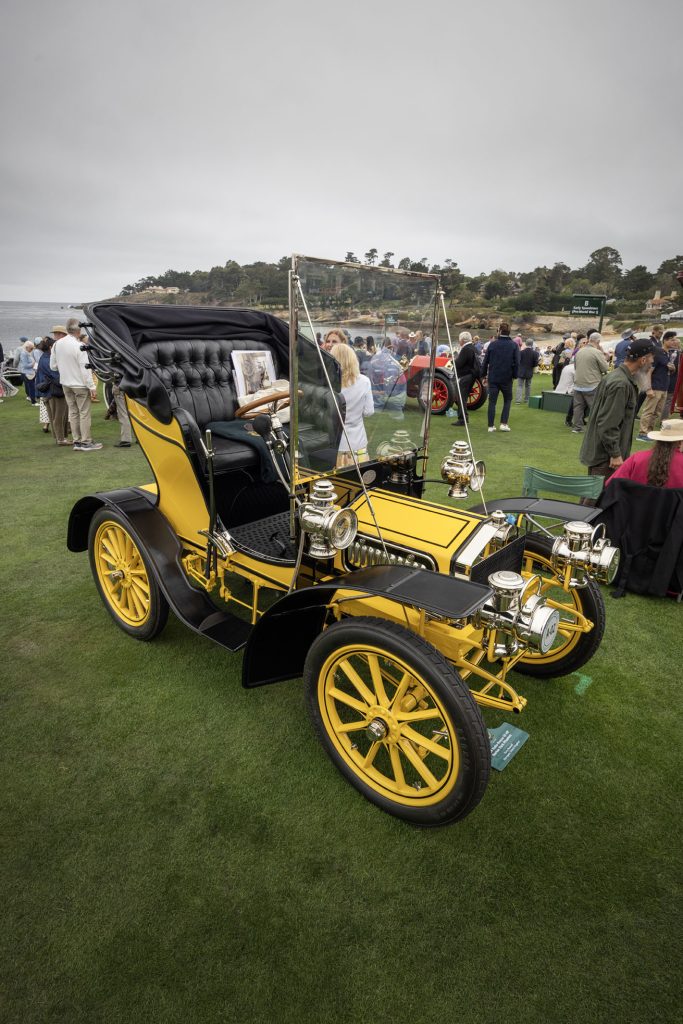
Slightly over two decades later, the same brand could form the basis for something as completely different as the Rolls-Royce Phantom I Jonckheere Aerodynamic Coupé, better known as the Round Door Rolls-Royce.
The basis is a 1925 Phantom I chassis, but the car later received its extreme coupé body built by the Belgian coachbuilder Jonckheere. The enormous circular doors are of course the detail that gave the car its nickname, but the entire bodywork is remarkable. The sloping roofline, covered rear wheels and long rear end create a car that is enormous yet surprisingly streamlined.
Right behind it stood another rarity, a 1932 Austro-Daimler ADR8 Offag Alpen Sedan, yet another example of the incredible mix of cars gathered along this part of Pebble Beach.
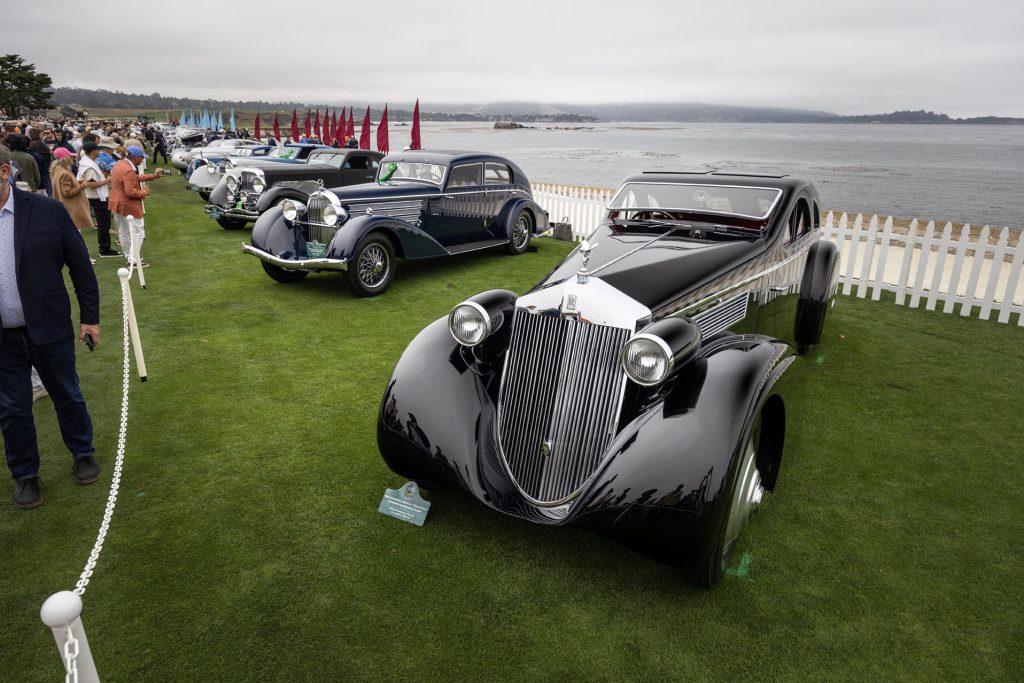
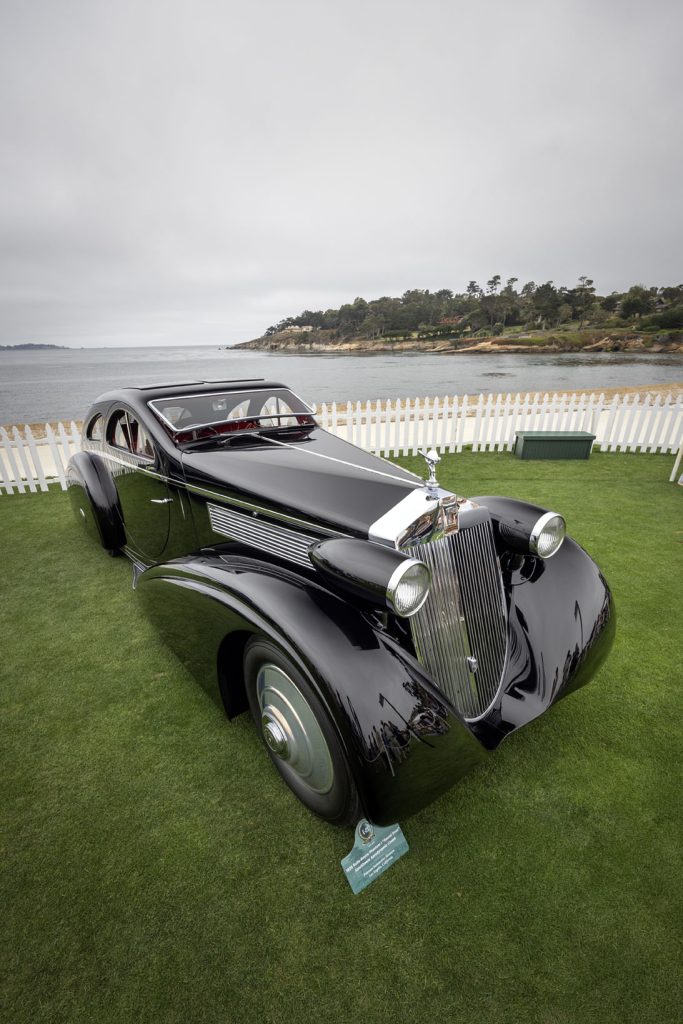
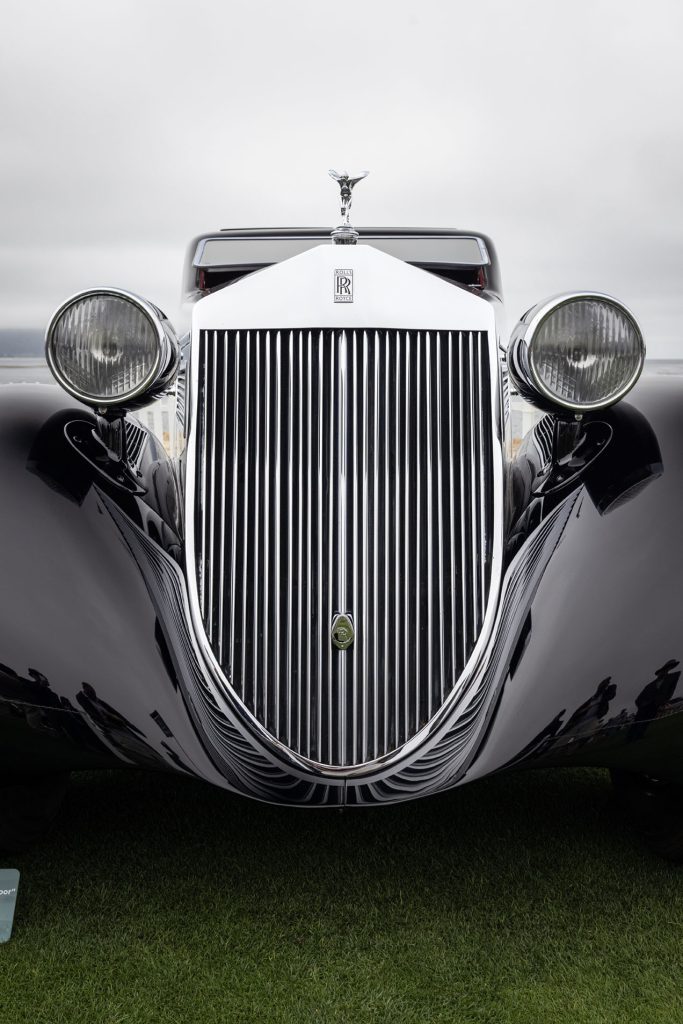
Being able to see these cars on the same day is part of the charm of Pebble Beach. One Rolls-Royce comes from the very beginning of the brand's history, the other from a period when independent coachbuilders could use a Rolls-Royce chassis to create something that was almost without limits.
Phantom Corsair
A car that on the other hand didn't really look like anything else on the lawn was the 1938 Phantom Corsair. It almost looks like a concept car from a considerably later time, but was created almost 90 years ago.
Behind the project was Rust Heinz, heir to the Heinz family, who wanted to create his own vision of the car of the future. The Phantom Corsair was built on a front-wheel drive Cord chassis, and the spectacular bodywork was created in collaboration with Bohman & Schwartz in California. Only a single example was built.
Almost nothing on the car follows the conventions of a late 1930s American car. The wings are fully integrated into the body, the windows are extremely low and the entire car looks as though it has been shaped as a single, cohesive body. The details become almost even more fascinating up close, not least the long, pointed bonnet with its characteristic air vents and the chromed front grille that wraps around the nose of the car.
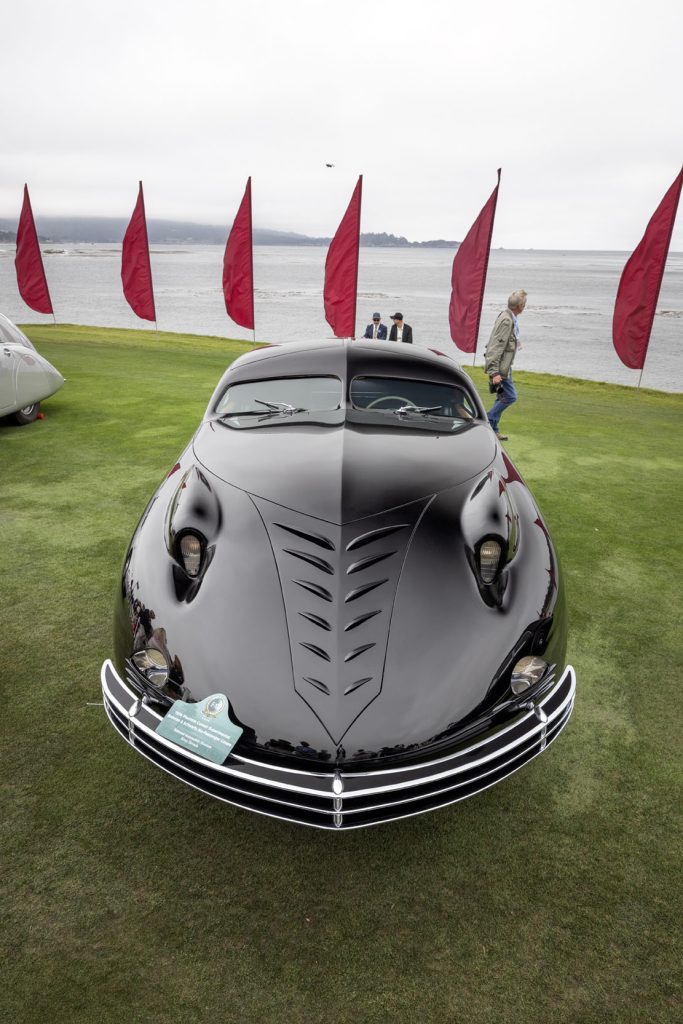
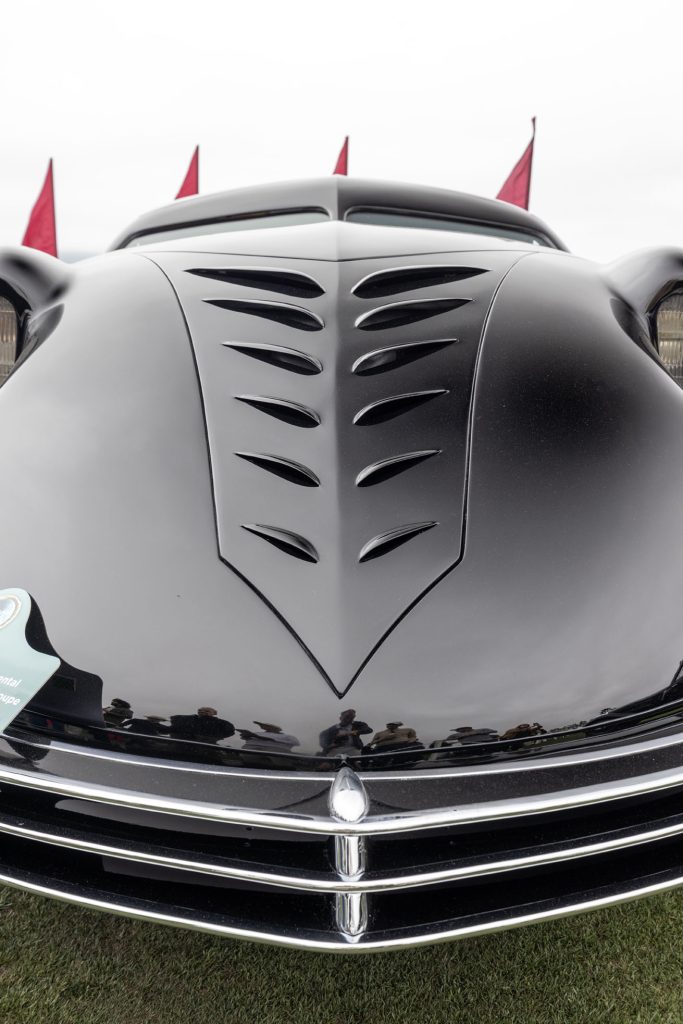
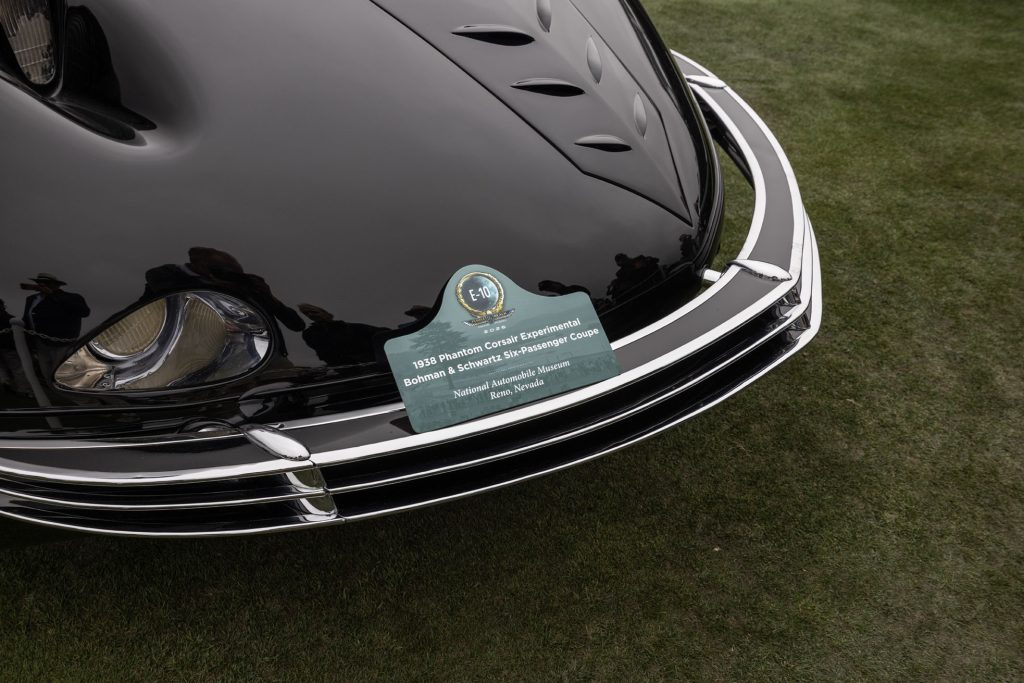
However, it wasn't just the Phantom Corsair that made this part of the exhibition interesting. Directly behind it stood a streamlined Tatra from the 1930s. Two completely different cars, created on either side of the Atlantic, but both clear examples of how designers during the same period began exploring aerodynamics and entirely new shapes for the car of the future.
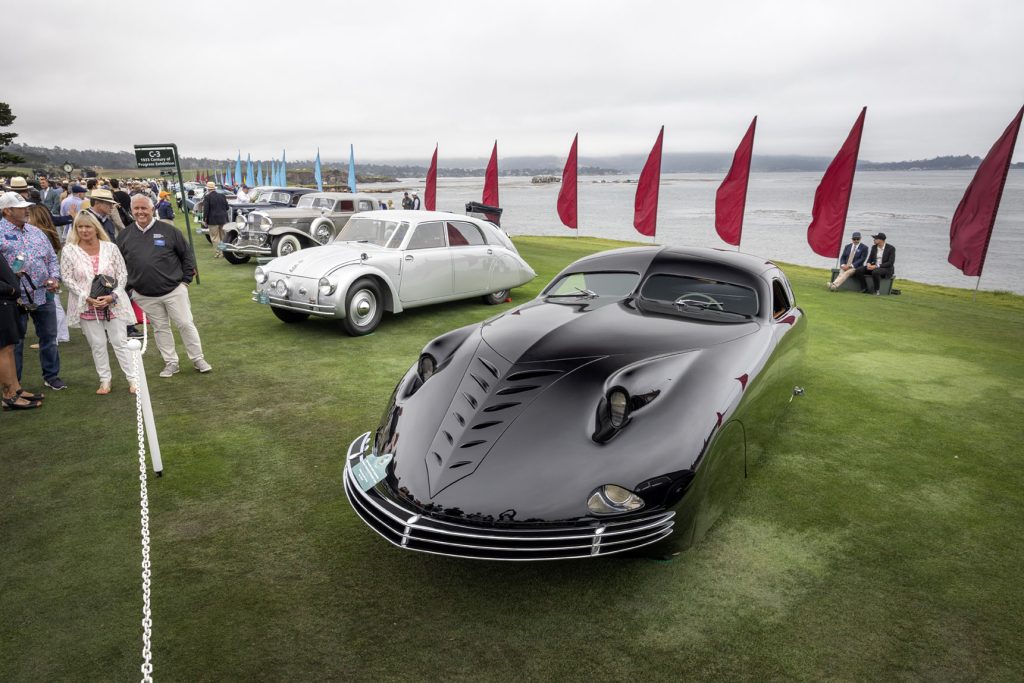
Nearly 90 years later, the Phantom Corsair still looks futuristic.
Ferrari at Pebble Beach
Then I came to a part of the exhibition where it became very difficult for me to move on. Here stood several cars from some of the most important periods in Ferrari's racing history.
One of them was the Ferrari 340 MM with an open Spider body by Vignale. The 340 MM was developed for major long-distance races, and the model won the Mille Miglia in 1953. It was a time when Ferrari's racing cars could be brutal racing machines and at the same time some of the most beautiful cars ever built.
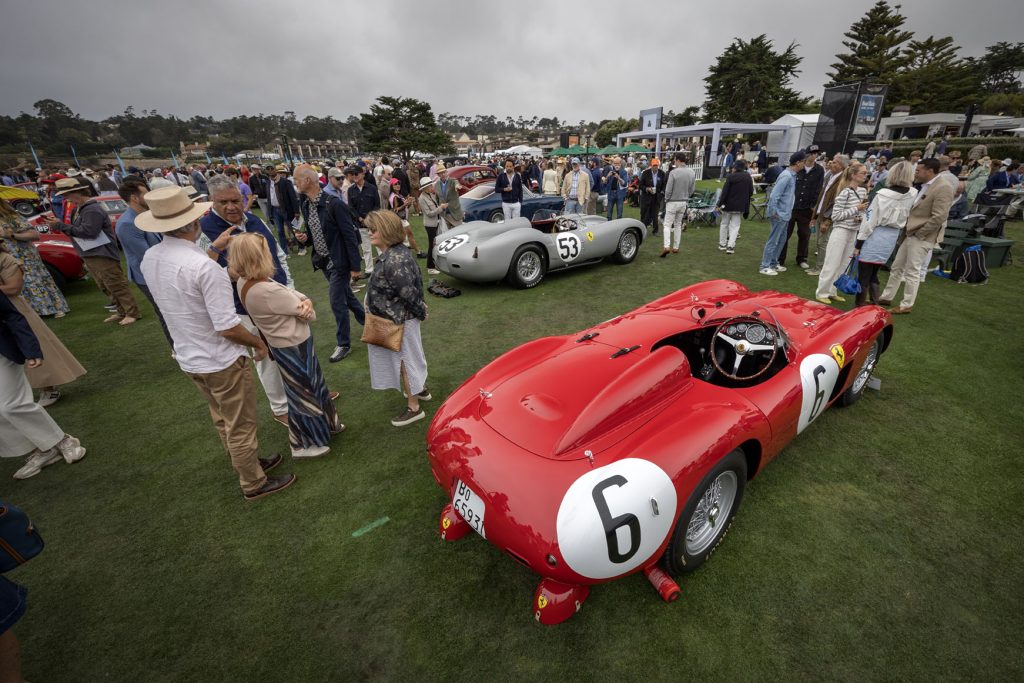
Among the cars was also a 1966 Ferrari 275 GTB/C with a body by Scaglietti. It was developed for racing and at first glance looks almost like a standard 275 GTB, but under the skin the story is entirely different. The cars were built in very limited numbers with a lightweight body and extensive modifications for racing.
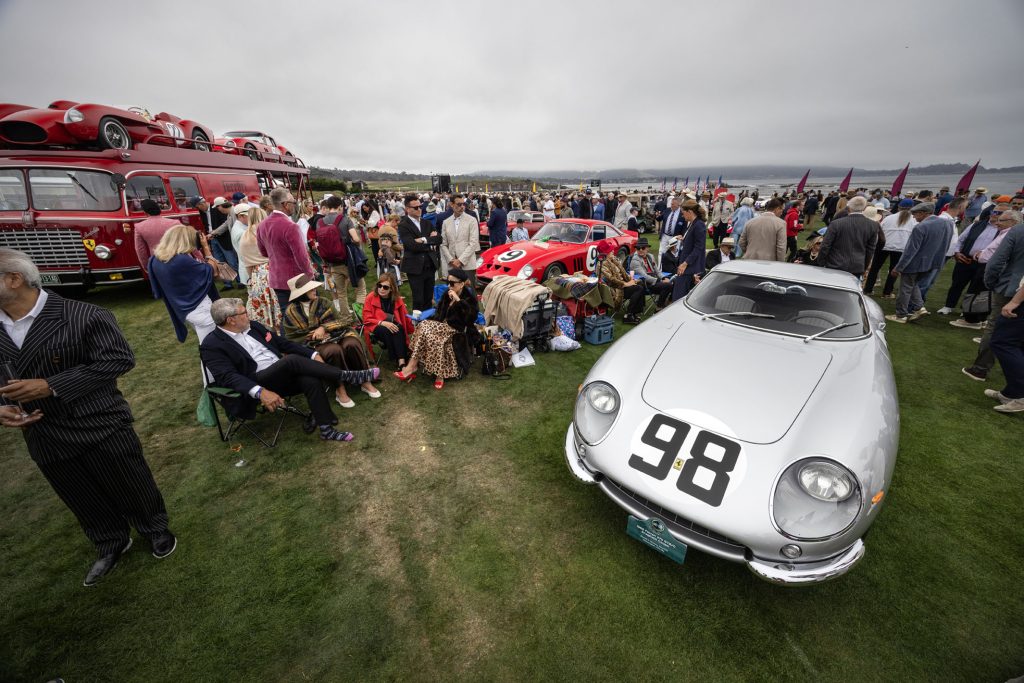
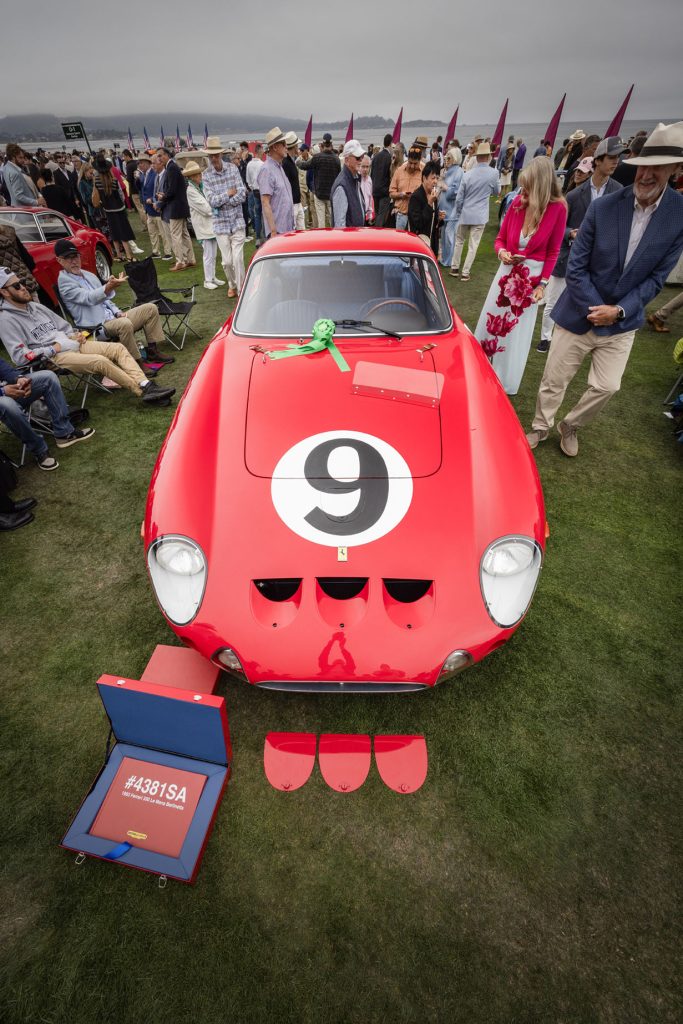
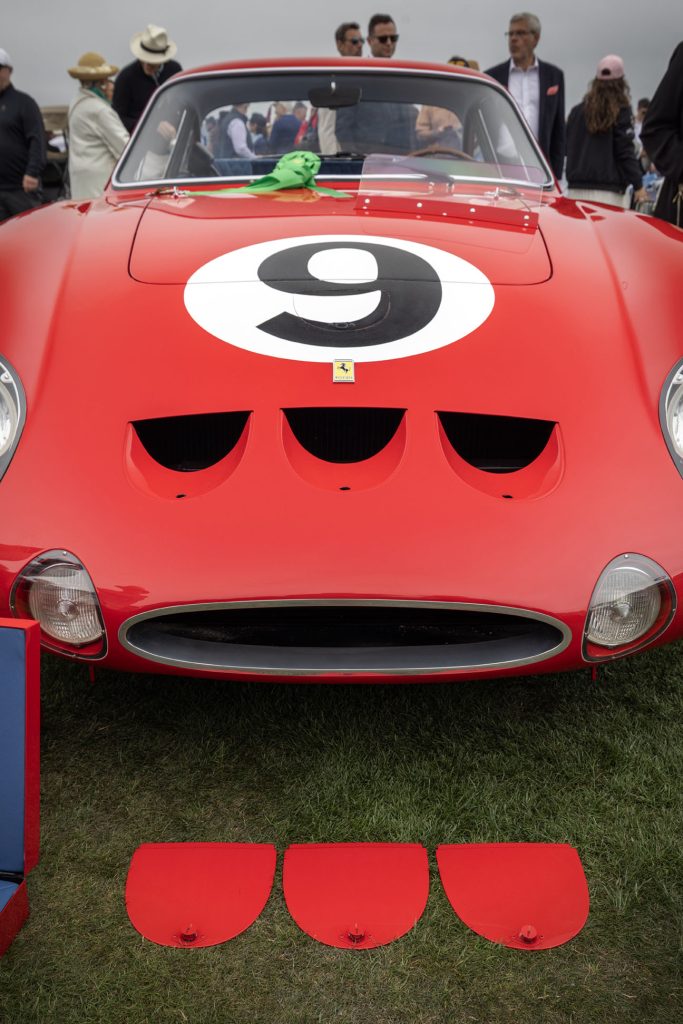
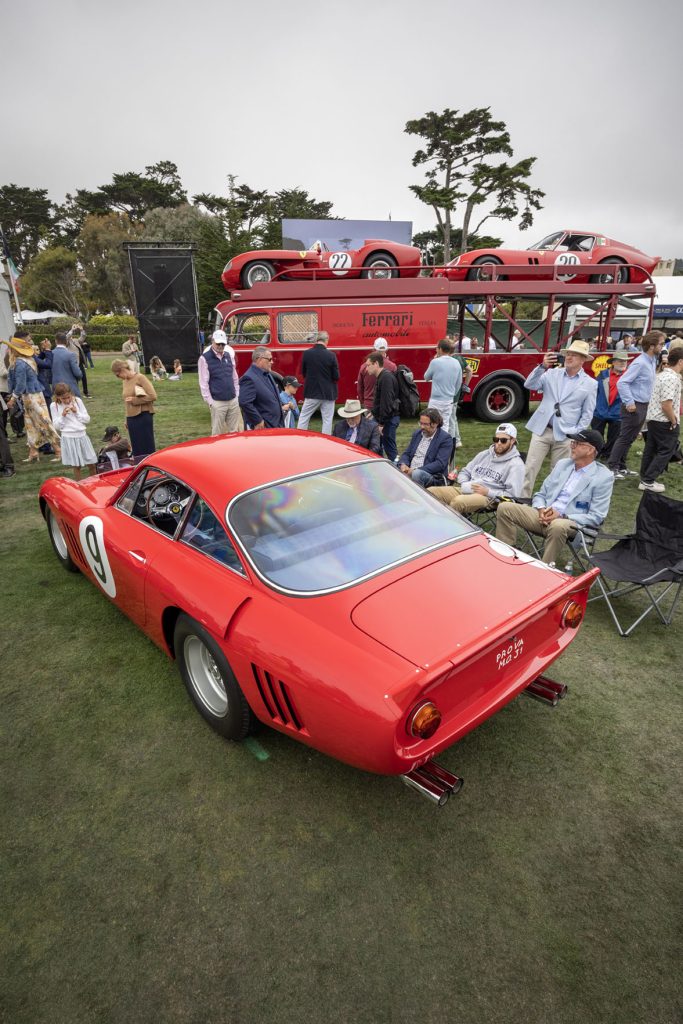
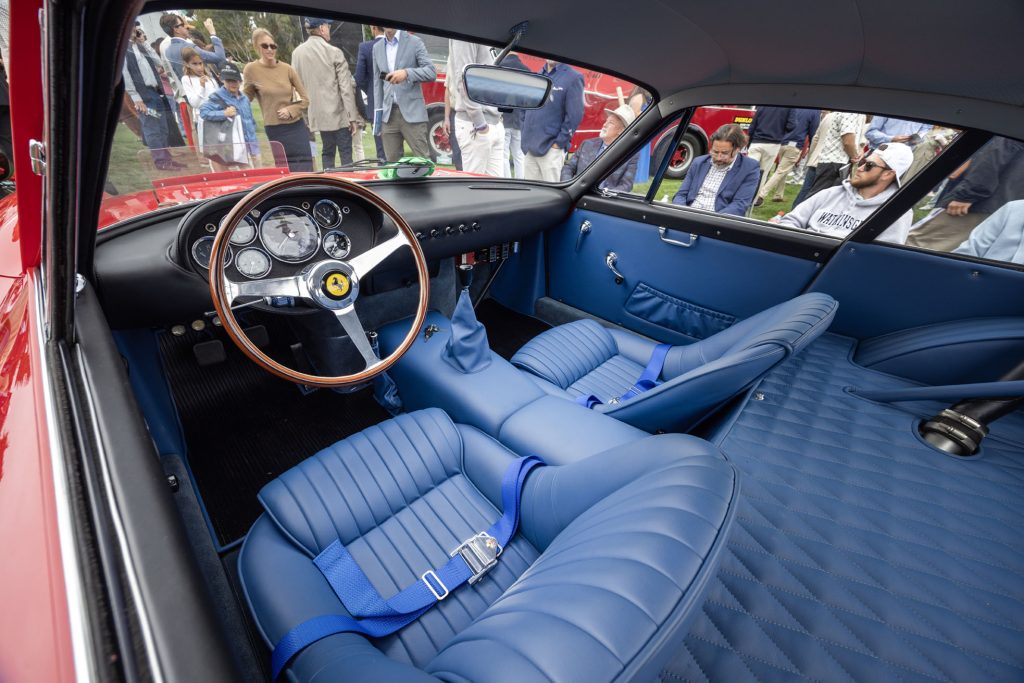
And then, of course, there was the Ferrari 250 GTO.
A model that hardly needs any further introduction and is today one of the world's most famous and valuable cars. But at the same time, it is easy to forget what the 250 GTO was actually created for.
It was developed for FIA GT racing and combined Ferrari's three-litre Colombo V12 with a body shaped to perform at high speed. The result was one of Ferrari's most successful GT cars and a model that contributed to the brand's three consecutive victories in the GT class of the International Championship for GT Manufacturers in 1962, 1963 and 1964.
Seeing a 250 GTO is always special. Seeing one here alongside a 340 MM, 275 GTB/C and several other historic Ferraris made it even better.
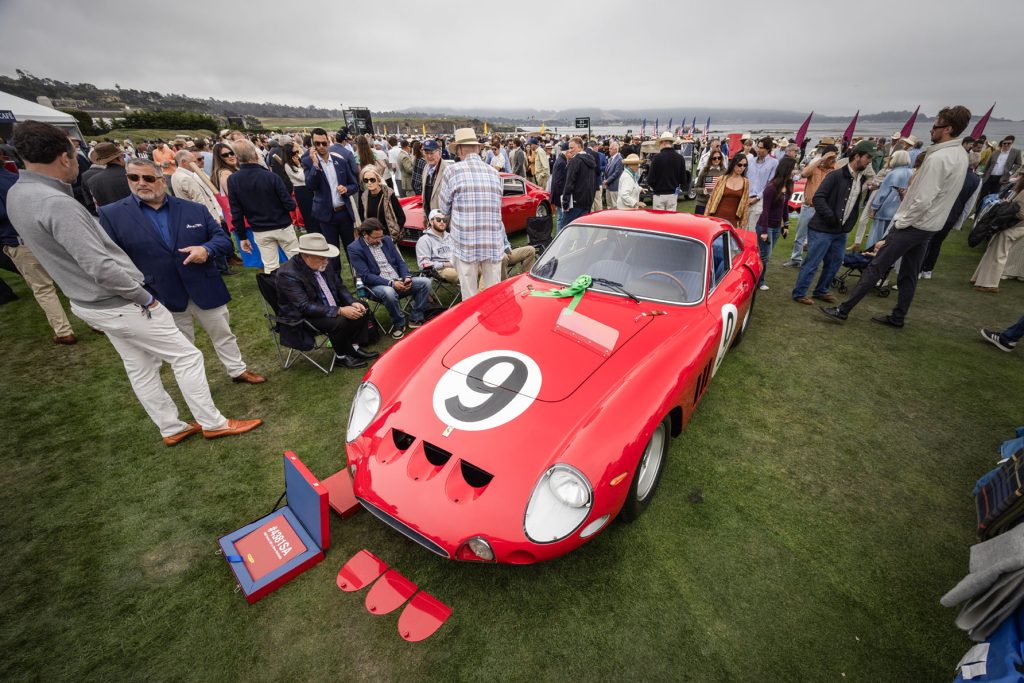
But one of the largest items in the Ferrari collection was actually not a car.
Ferrari's Bartoletti transporter
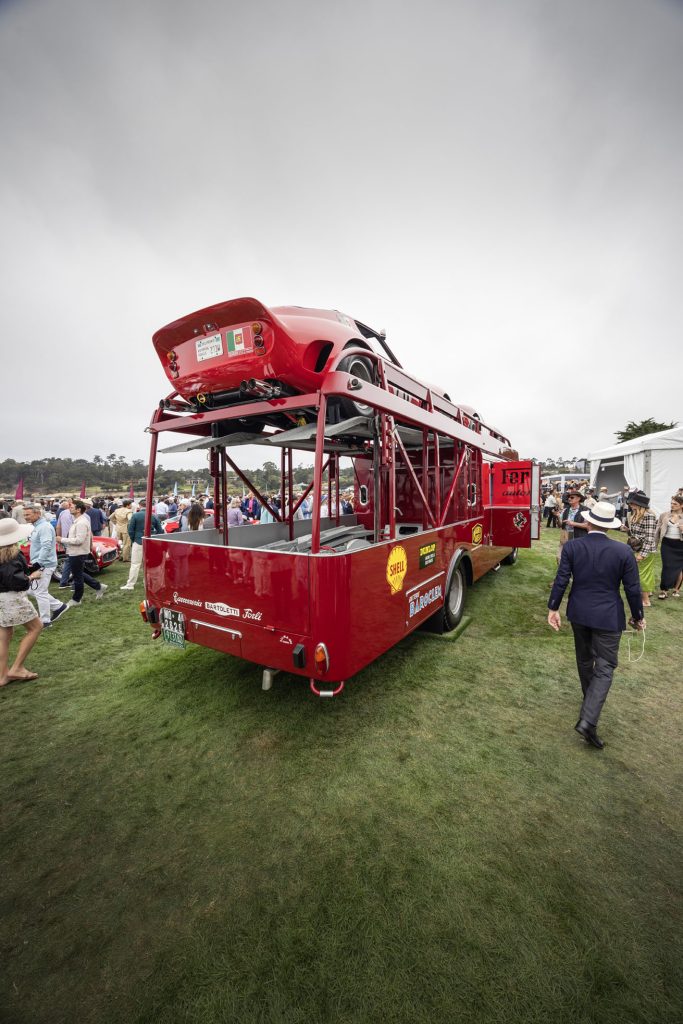
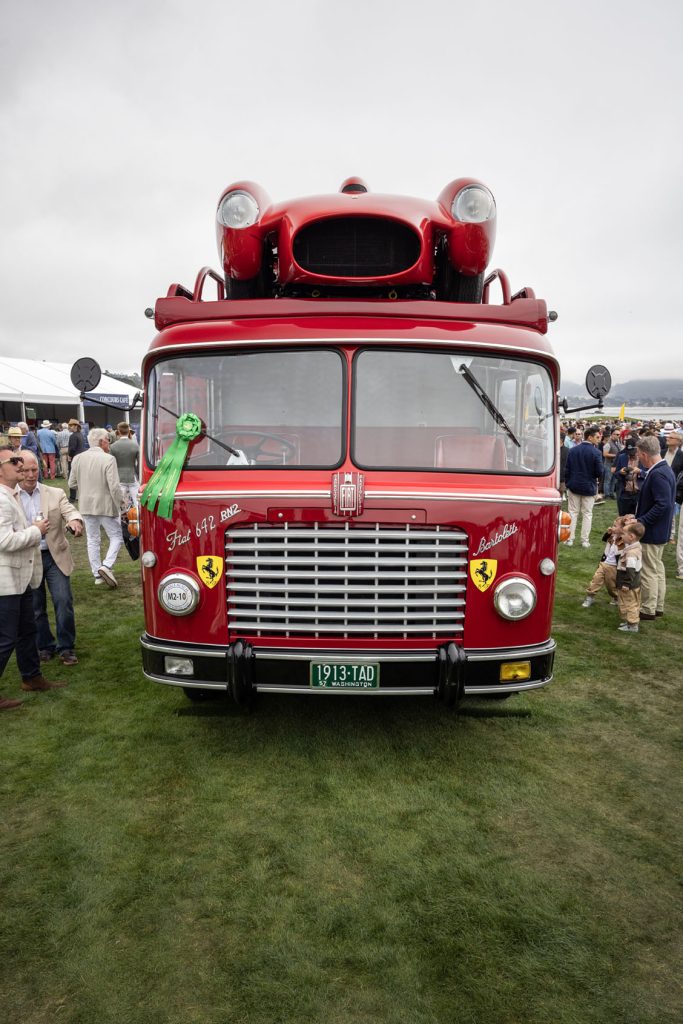
The enormous red transporter almost looked like an exhibition within the exhibition. The base is a Fiat 642 RN2 which Bartoletti converted into a racing car transporter for Scuderia Ferrari. It could transport three racing cars at the same time, two on the upper deck and one lower down, and was used by Ferrari until the mid-1960s.
At Pebble Beach, two of Ferrari's most iconic racing cars were also sitting on top of the transporter, a Ferrari 250 Testa Rossa and a Ferrari 250 GTO. That made the whole rig a pretty unbeatable sight.
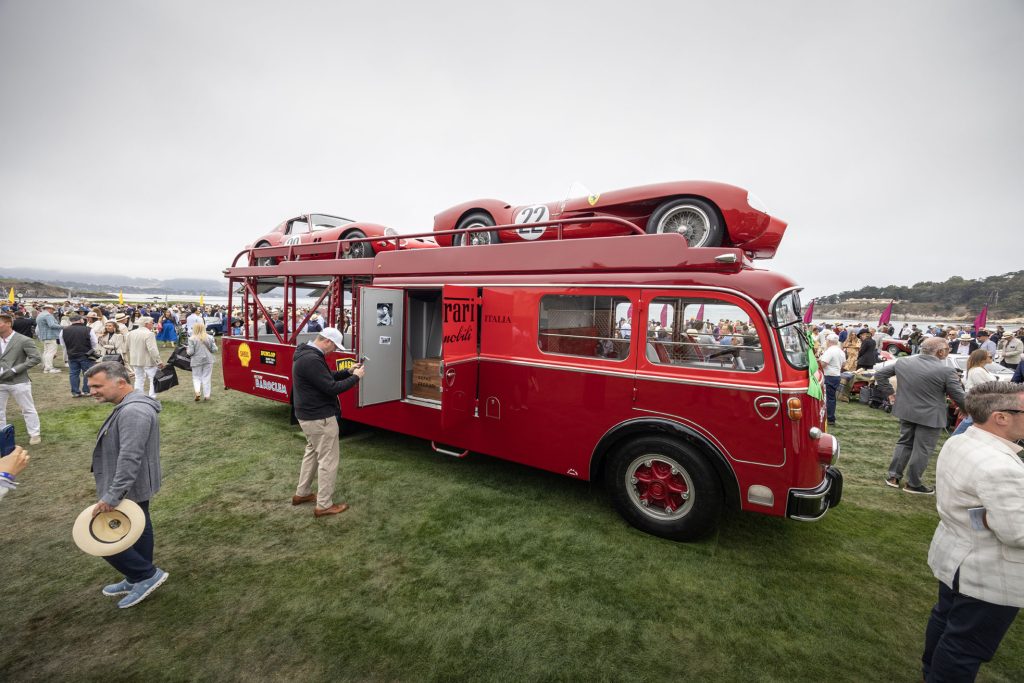
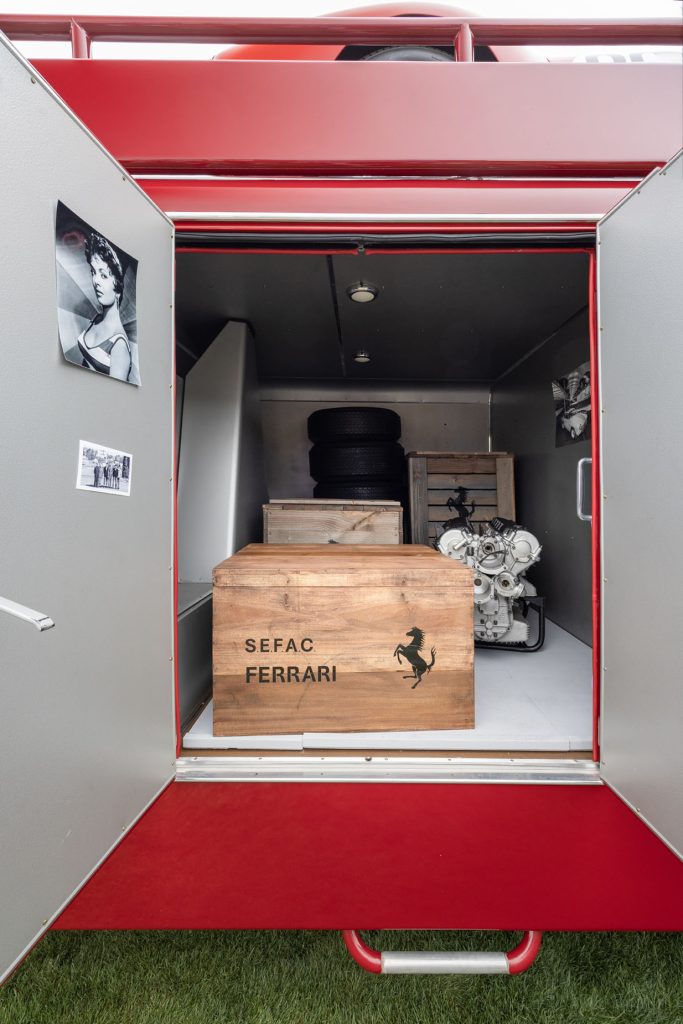
The great thing was that they hadn't just exhibited the transporters and the cars themselves. One of the hatches was open and inside you could see, among other things, wooden crates marked S.E.F.A.C. Ferrari, spare tyres and an engine. It gave a sense of how this type of transport actually functioned as part of Ferrari's racing operations, not just as a way of moving cars between circuits.
Today, Formula 1 cars and sports cars are transported in enormous enclosed trucks where the cars are barely visible from the outside. Here, it was the complete opposite. The racing cars were transported completely in the open on top of the truck through Europe from track to track.
From the infancy of motoring
One of the things that makes Pebble Beach so fascinating is the sheer breadth. In the space of a few hours, it is possible to move from some of the earliest cars to Bugatti and the great French coachbuilders, on to a unique creation like the Phantom Corsair, and then straight into Ferrari's racing history.
In between are cars from almost every era. One of them was a 1907 Thomas-Detroit Model C Runabout, from a time when the car industry was still in its infancy. Not far away stood a Packard Model 30, yet another example of how quickly the car developed during the first decades of the 20th century.
And everywhere there were details to be discovered. On a Bentley, I was drawn to the classic winged B emblem and the radiator mascot. At Pebble Beach, it is almost as easy to find yourself lingering over a small detail as it is in front of the entire car.
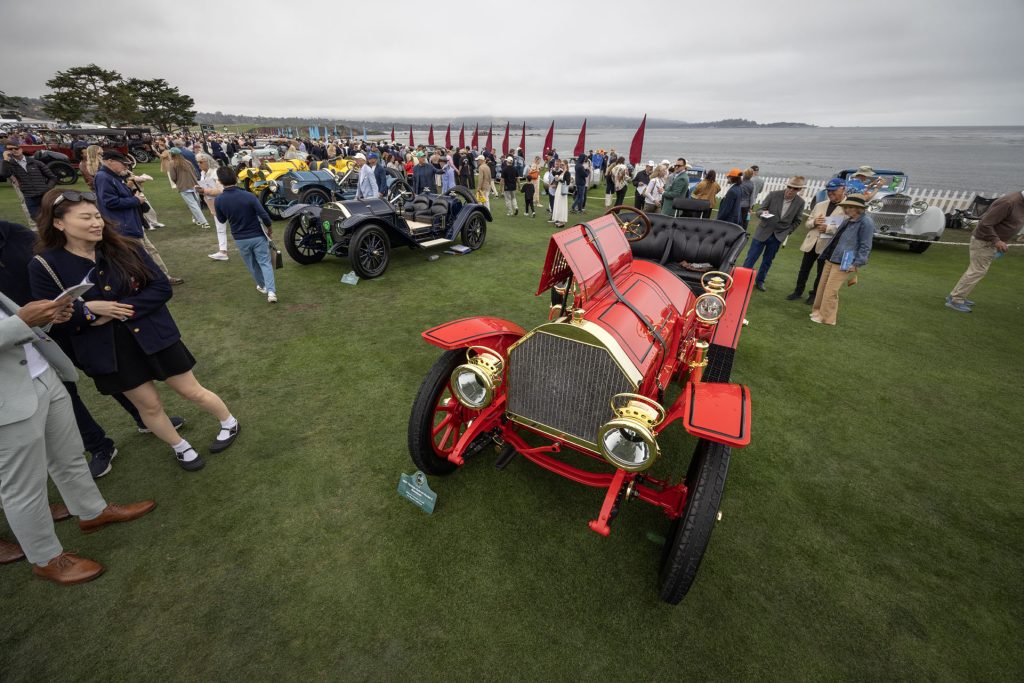
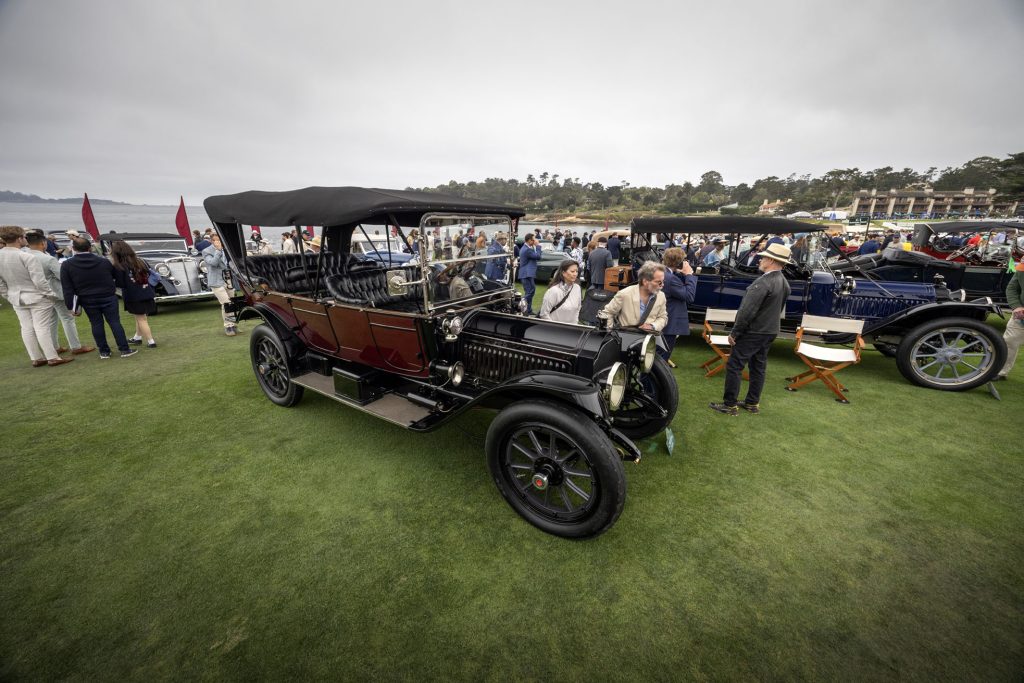
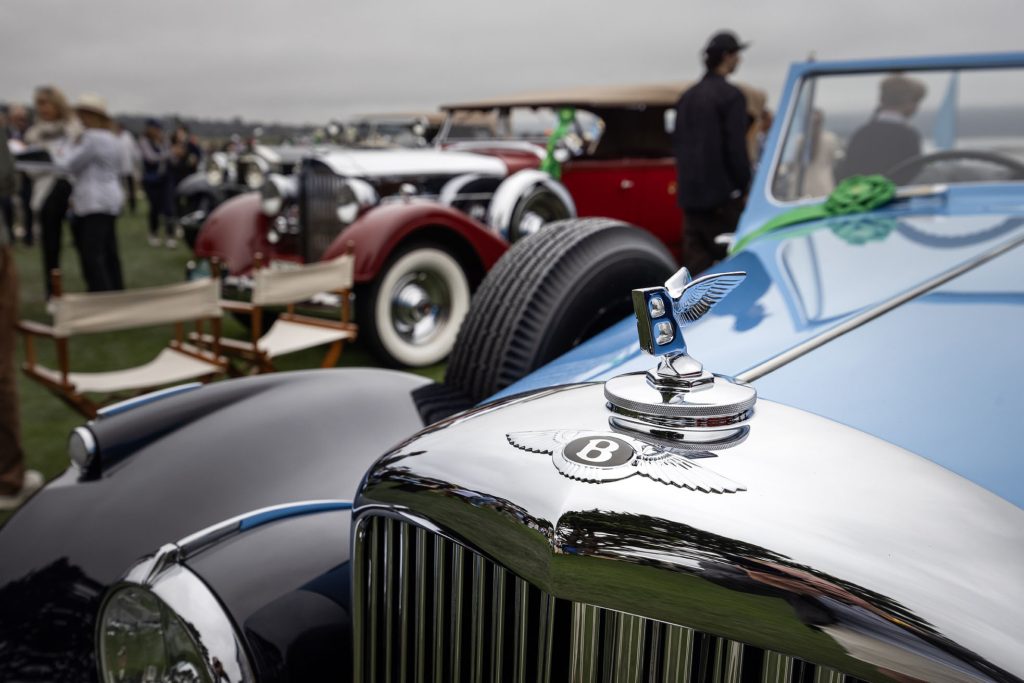
Cars that one previously had only seen in old photographs, in books or in museums suddenly stand before one on the same lawn. And the more one looks, the more details one discovers.
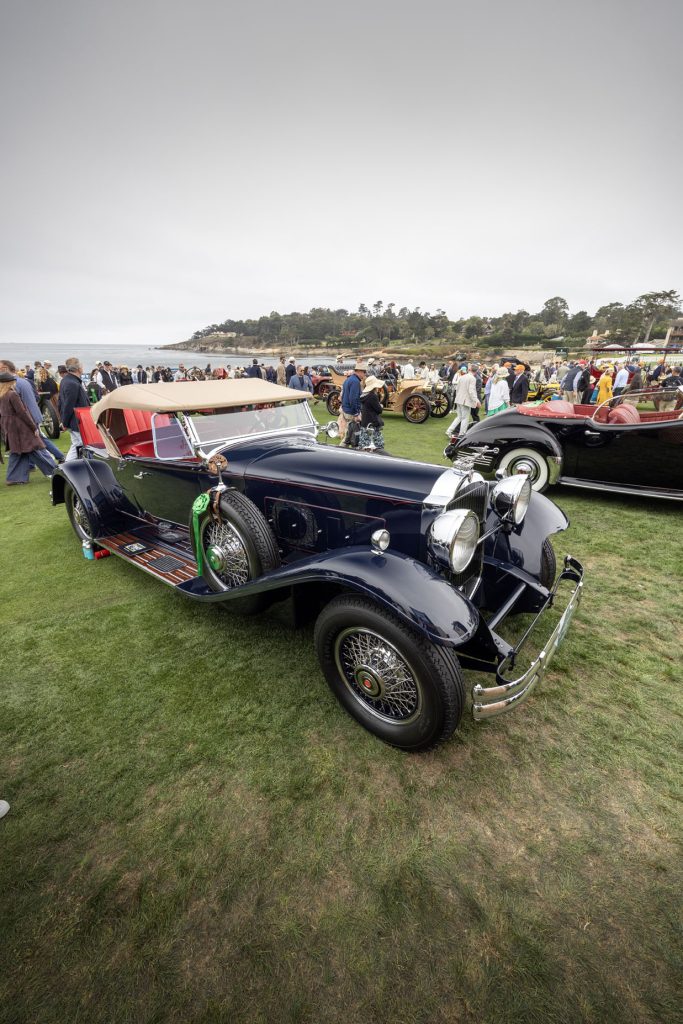
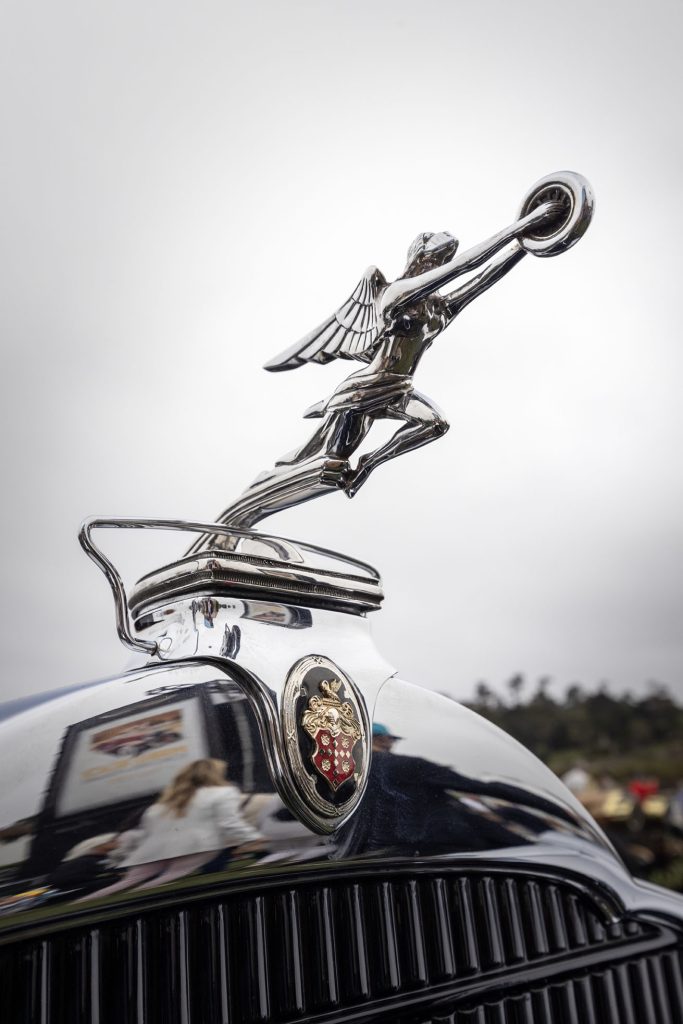
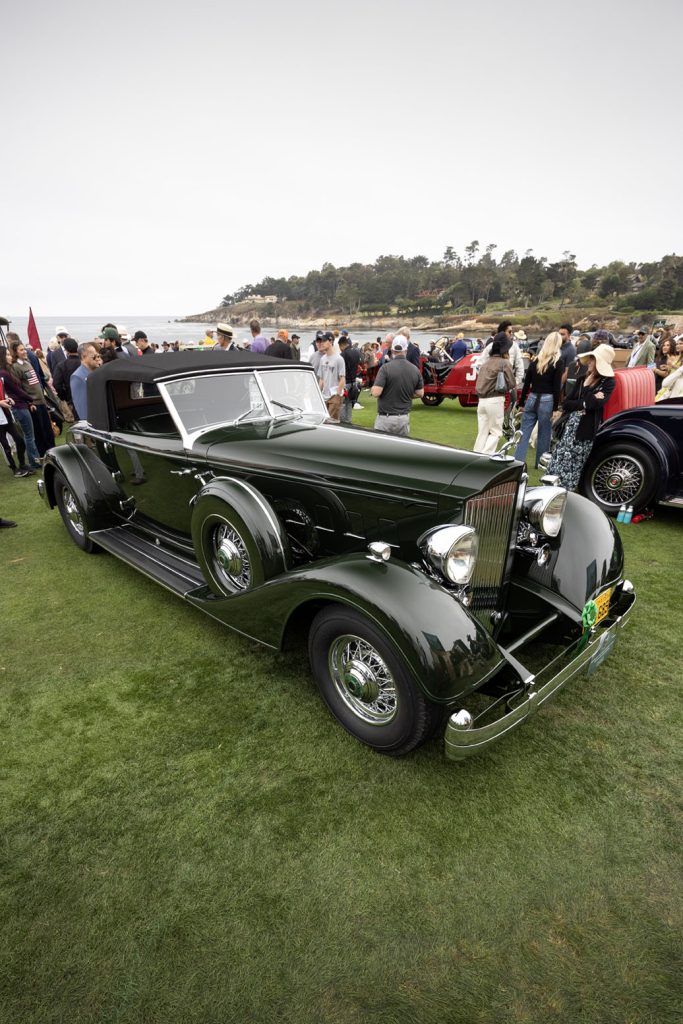
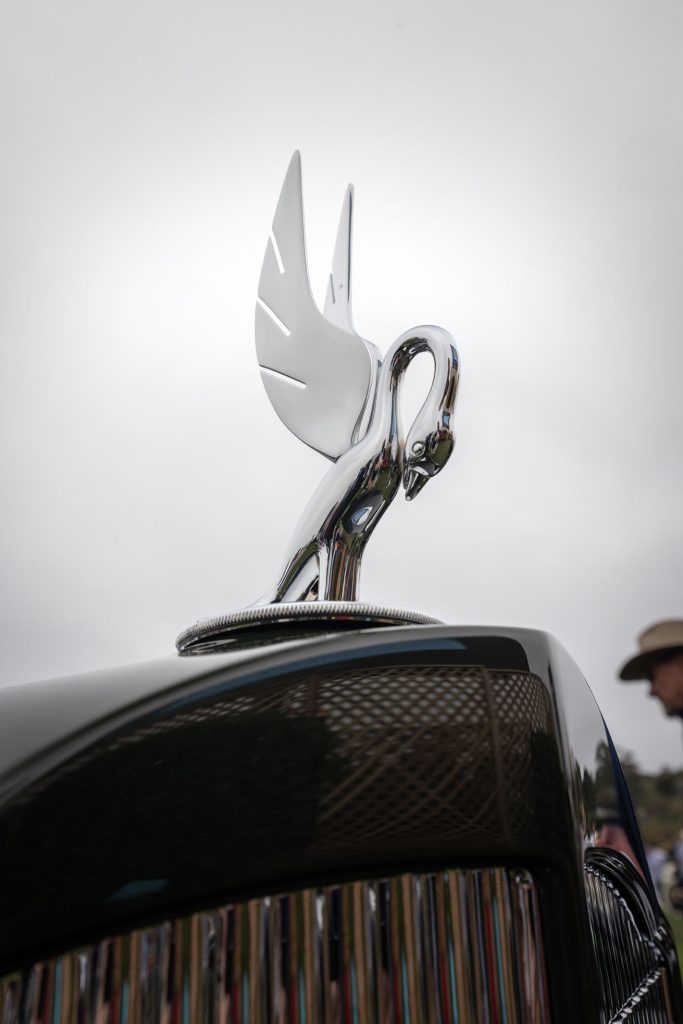
With the big American cars from this era, it’s almost as easy to be captivated by the details as by the cars themselves. Chrome, enormous radiator grilles and embellishments that today feel almost like little works of art. The radiator ornaments, in particular, gave each car its own identity, and at Pebble Beach there are almost endless variations to discover.
After an eventful, to say the least, week in Monterey, Pebble Beach was a very fitting conclusion to my first Monterey Car Week.
A week that turned out considerably better than I could have imagined
When I look back on the whole journey, it's almost hard to understand how well everything actually turned out. When I went to California, Pebble Beach was the only event during Monterey Car Week that I had confirmed accreditation for. The rest simply had to sort themselves out along the way, and they really did.
Even the journey there started better than expected. Ahead of the flight, I had placed a bid with EuroBonus points to upgrade my economy ticket, but lost the bidding. So I had resigned myself to economy and was sitting in the SAS lounge with a glass of bubbly before boarding when a message suddenly arrived. I had been upgraded anyway thanks to my EuroBonus Gold card.
Quite a good start to the journey.
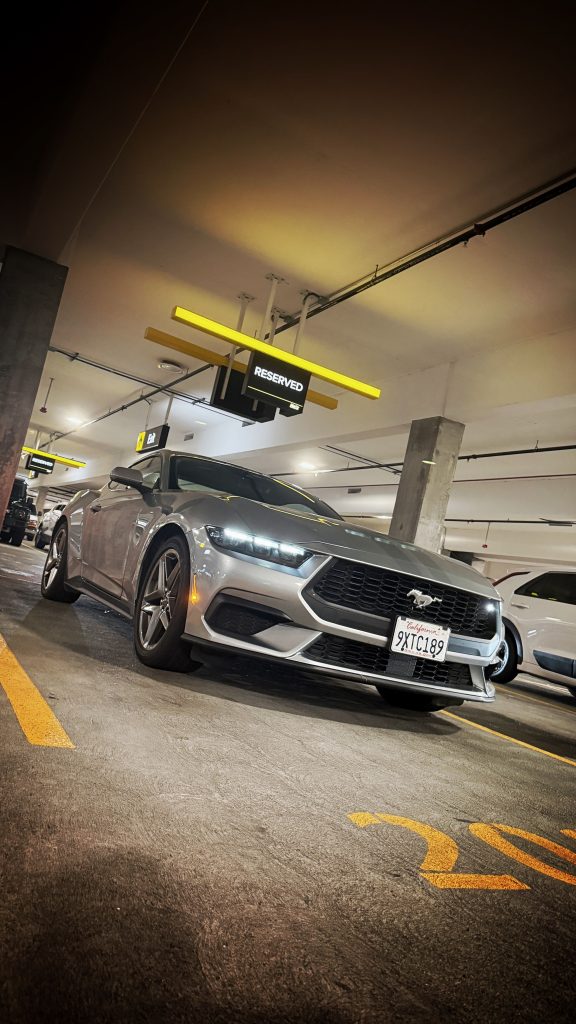
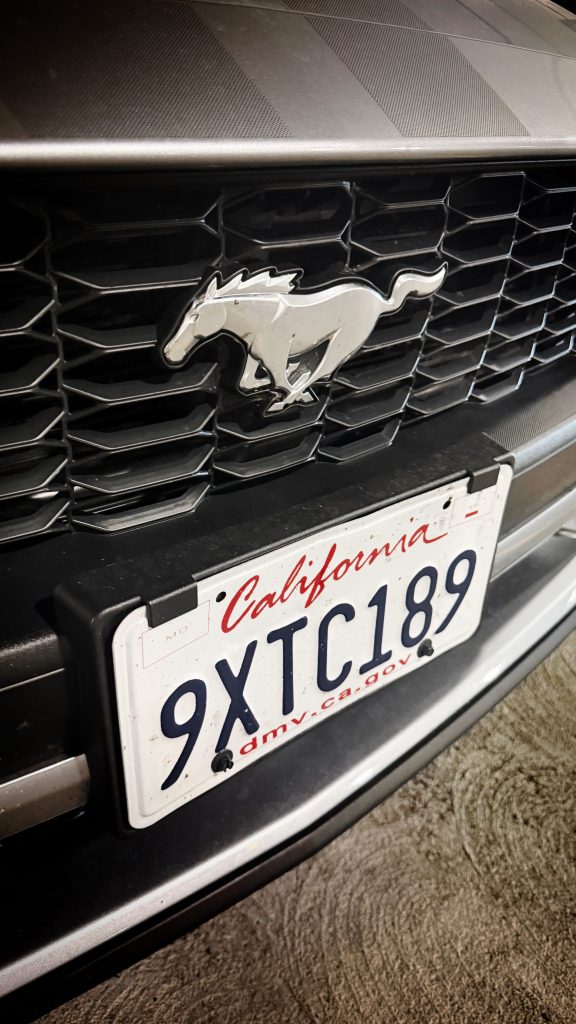
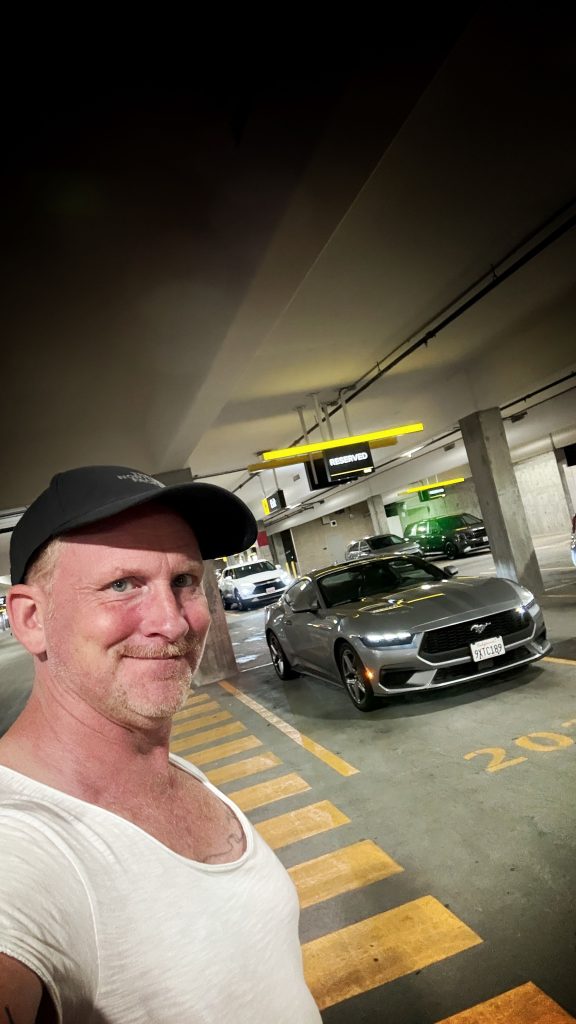
When I booked a hire car with Hertz I had opted for the Manager’s Special, which basically means you take whichever car happens to be available when you arrive. Before the trip, however, I’d sent an email to Hertz customer service, explaining who I was, that I worked as a motoring journalist and photographer, and that I was heading to California for Monterey Car Week. When, after the long flight, I arrived at Hertz at LAX, a Ford Mustang was waiting for me. Fortunately, it wasn’t a V8 but an EcoBoost, which meant that the petrol costs wouldn’t be quite as steep over all the miles I was going to drive.
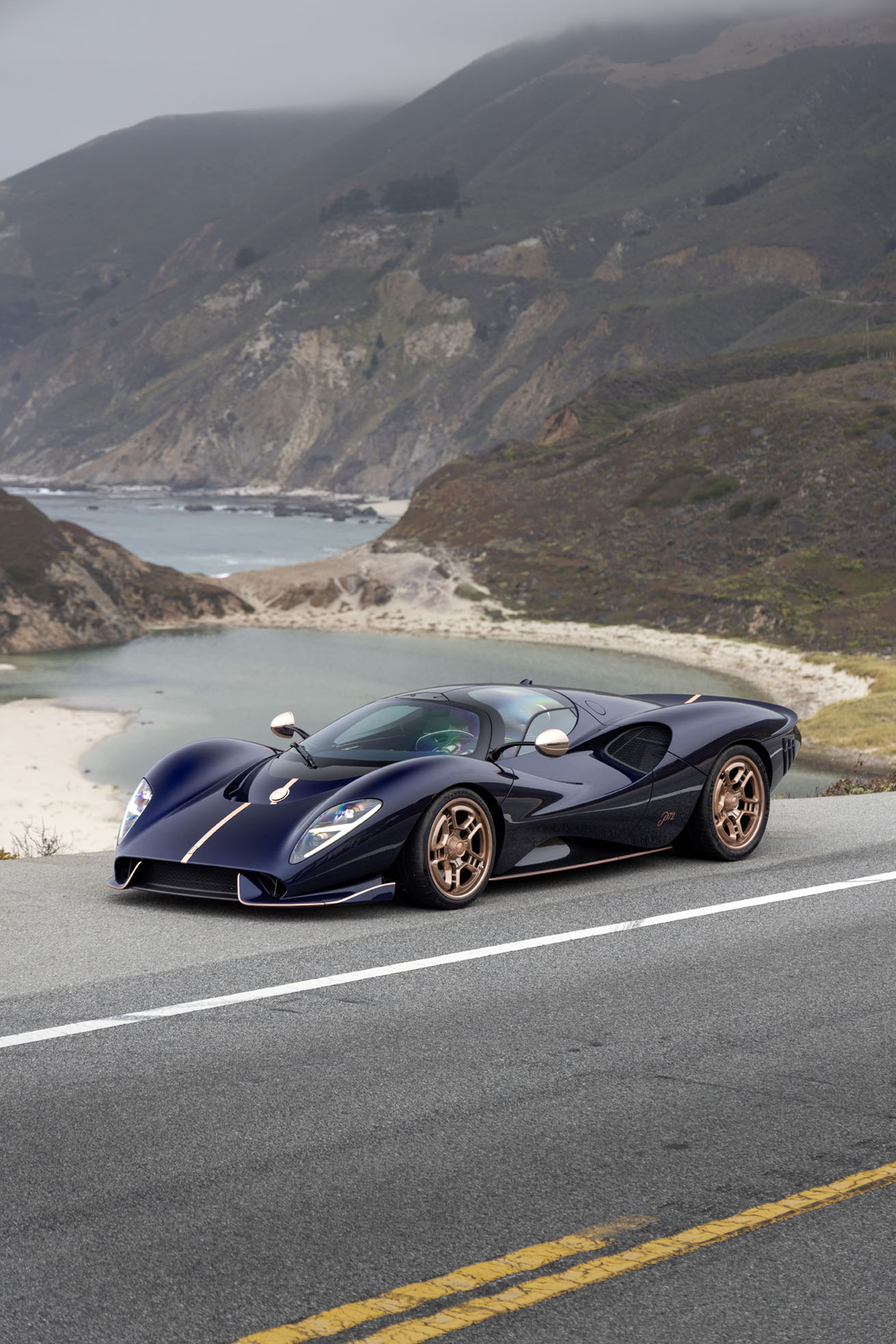
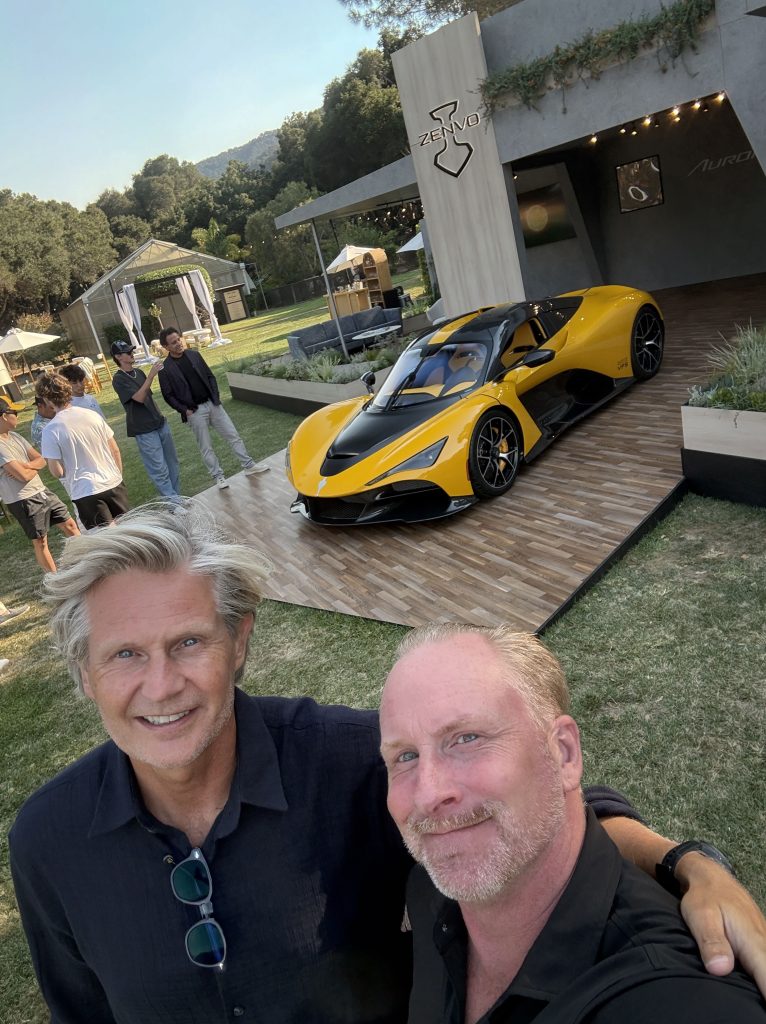
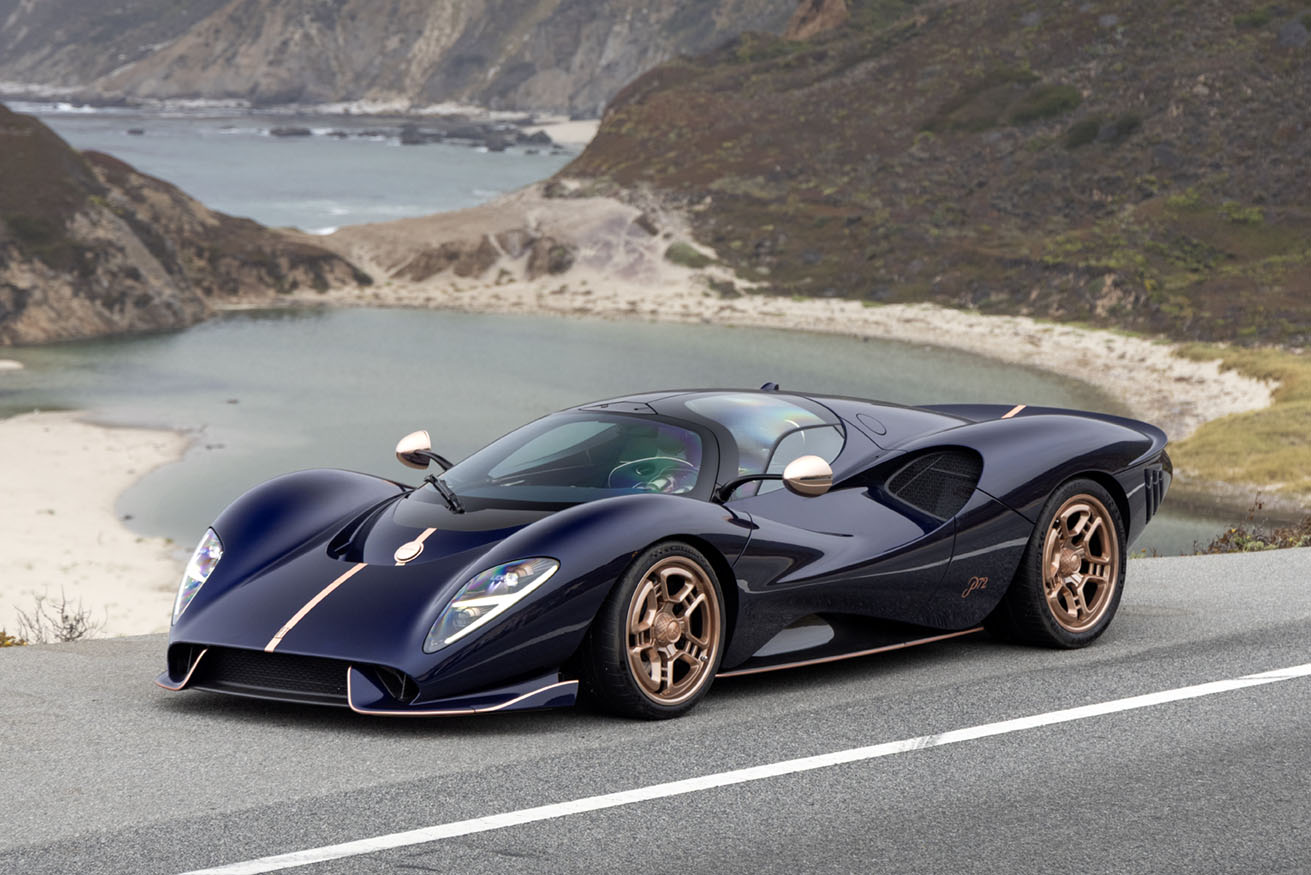
Then the week continued in much the same way. Thanks to Norman Choi, I was able to join the morning photoshoot of the De Tomaso P72 out at Big Sur, visit the Zenvo Villa and see the Aurora up close, follow the Pebble Beach Tour d’Elegance, and finally even get into The Quail, despite not having had any accreditation for it to begin with.
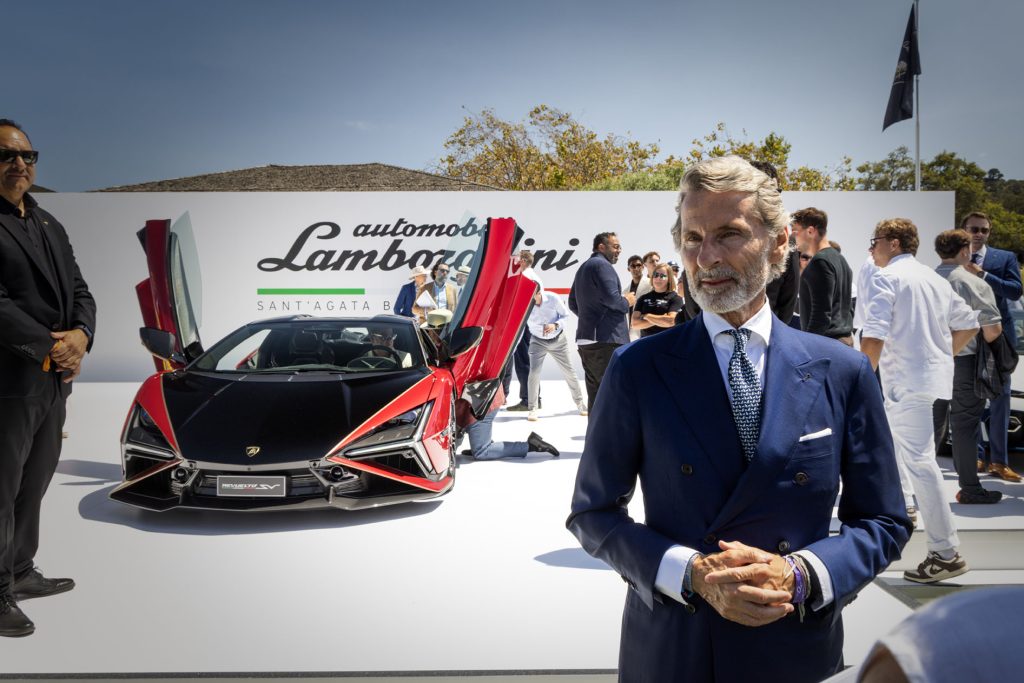
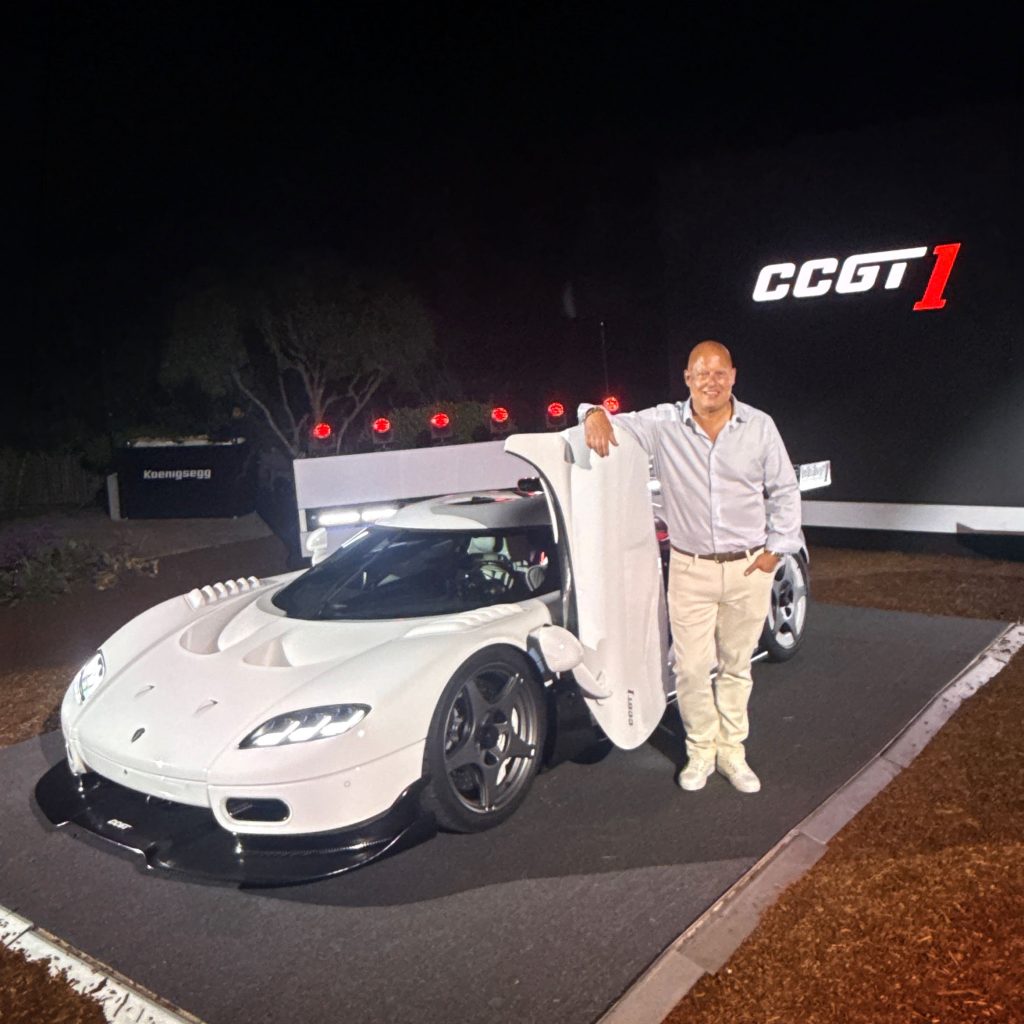
I was invited to Koenigsegg House and got to meet Christian von Koenigsegg, Halldóra and their two sons Sebastian and Samuel, while CCGT 1 stood in the garden. I got to go to Lamborghini House, meet Stephan Winkelmann again and interview both Mitja Borkert and Alessandro Farmeschi with the new Revuelto SV taking centre stage. In between, I also managed to drive and photograph the new Morgan Supersport along the California coast.
And so concluded the Monterey Car Week itself here at Pebble Beach, among some of the most fantastic historic cars I have ever seen gathered in the same place.
For the journey home I had gathered my courage and put considerably more EuroBonus points on a new upgrade bid. This time I won the bidding. After a week that had turned out so much better than I could have imagined, it felt pretty perfect to also end the trip that way.
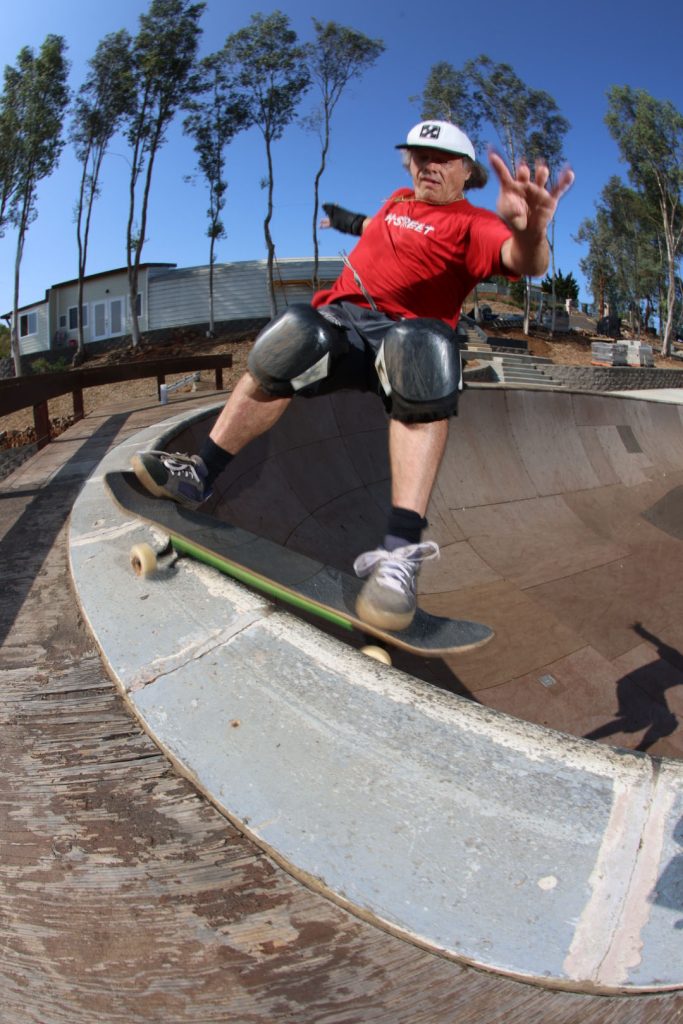
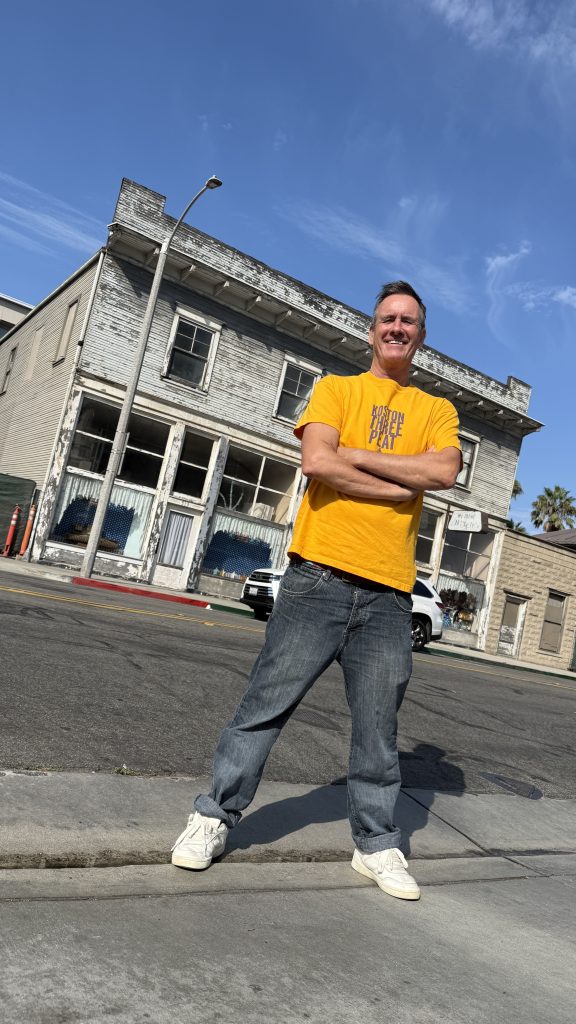
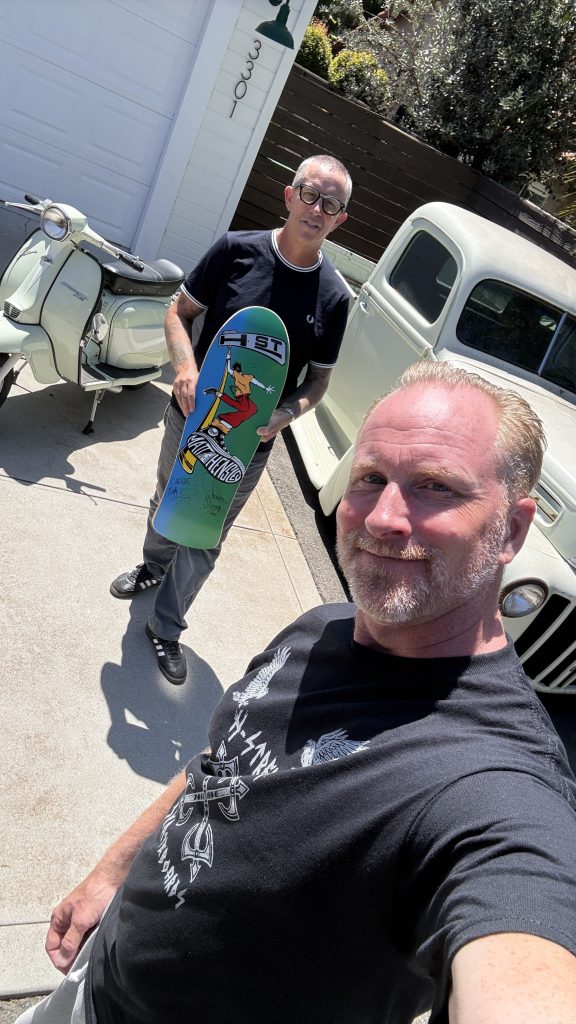
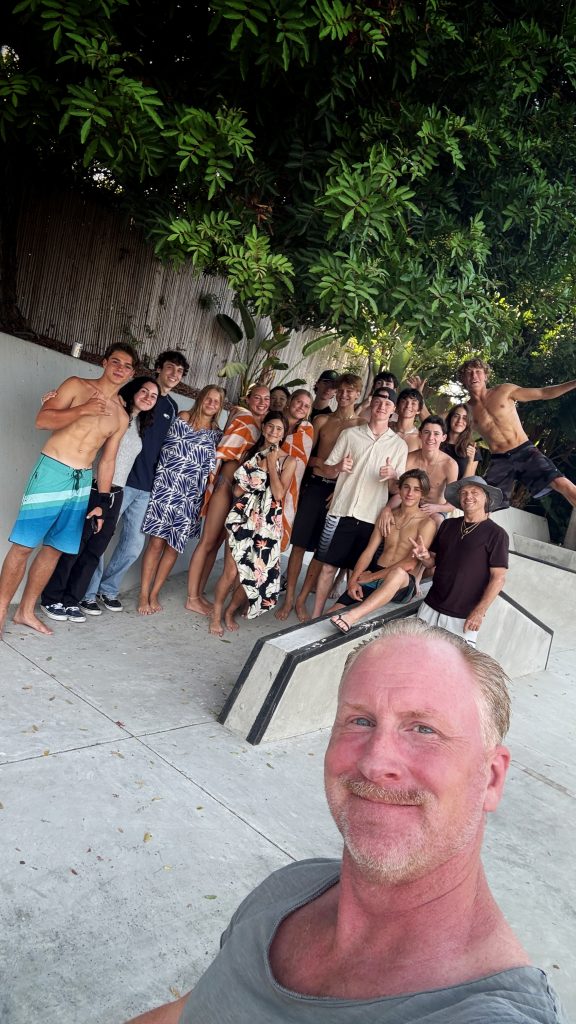
Then there was another side to the California trip that I hadn't expected at all. Everything skateboard-related that happened alongside Monterey Car Week almost became a trip within a trip and a story worth telling in its own right.
Among other things, I met Don Brown and Matt Hensley, whose signed boards I also got two of. And together with Tony Magnusson I suddenly happened to end up at a pool party with about twenty of the world's best skateboarders right now. You simply cannot plan things like that.
Furthermore, I am currently working on a photobook featuring my skateboard pictures that is coming out next year, so the material from California will fit like a glove in there.
But that story doesn't really fit in here among the pictures of some of the world's most exclusive cars.
That simply has to be another story.
For this time, it is enough to state that my first Monterey Car Week was a trip I will not soon forget. And after everything I got to experience during these days, the question is really not whether I want to go back.
That is when.

 English (UK)
  Svenska
Leave a Reply