
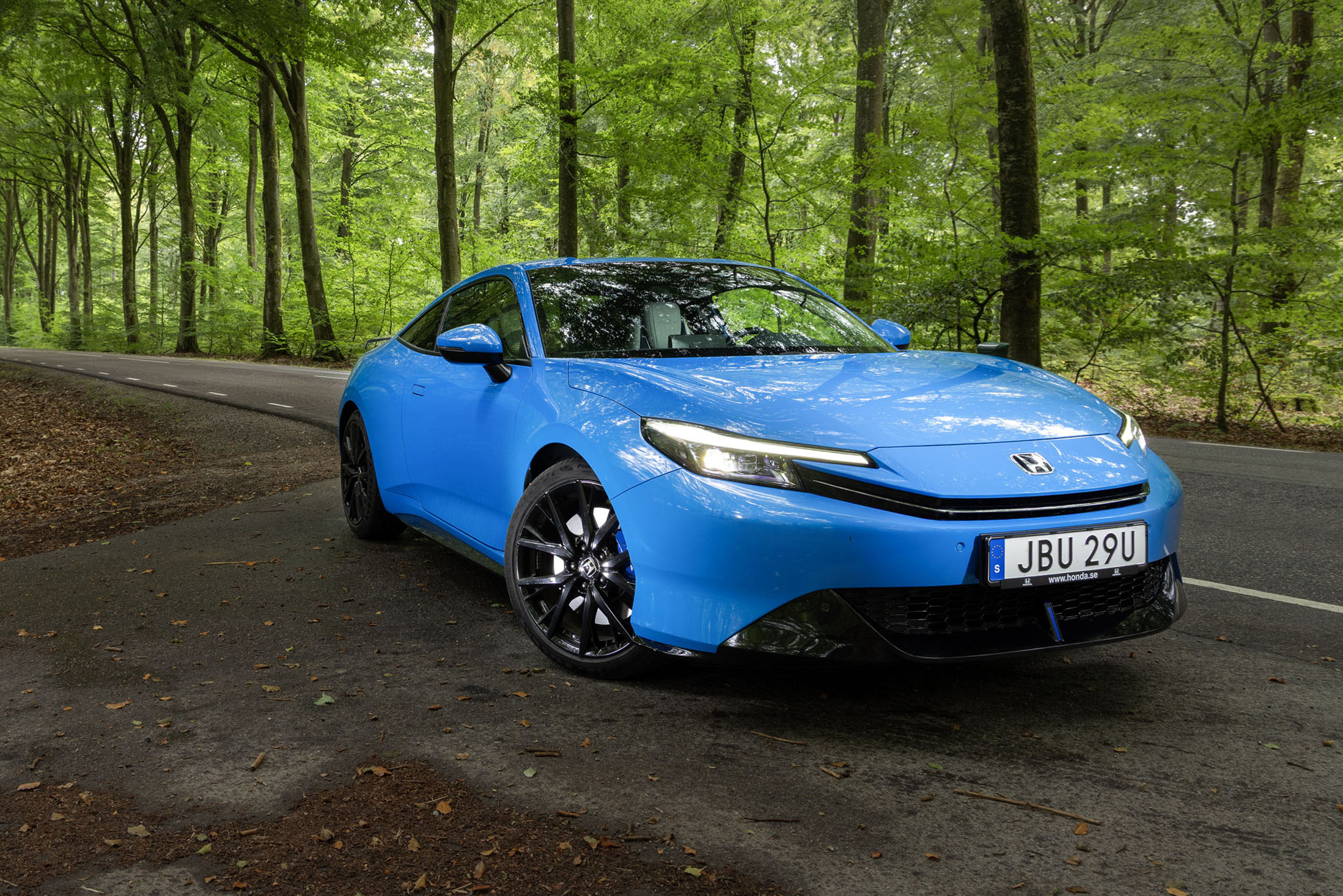
The Honda Prelude is back
It has been over 20 years since the Honda Prelude disappeared. Now the name is back. Not as an electric car, not as an SUV and not as some nostalgic copy of what it once was. Instead, Honda has built a low, two-door hybrid coupe with a clear goal: to be fun to drive. And after spending time behind the wheel of the new Prelude, I can say that Honda has largely succeeded. This is a car I like. It’s just the right size, sits low on the road and feels significantly more alert and engaging than the 184 horsepower on paper might suggest. Above all, the Prelude feels like a car created for people who still think that driving itself means something. But there is also one thing that irritates me quite a bit. We’ll get back to that.
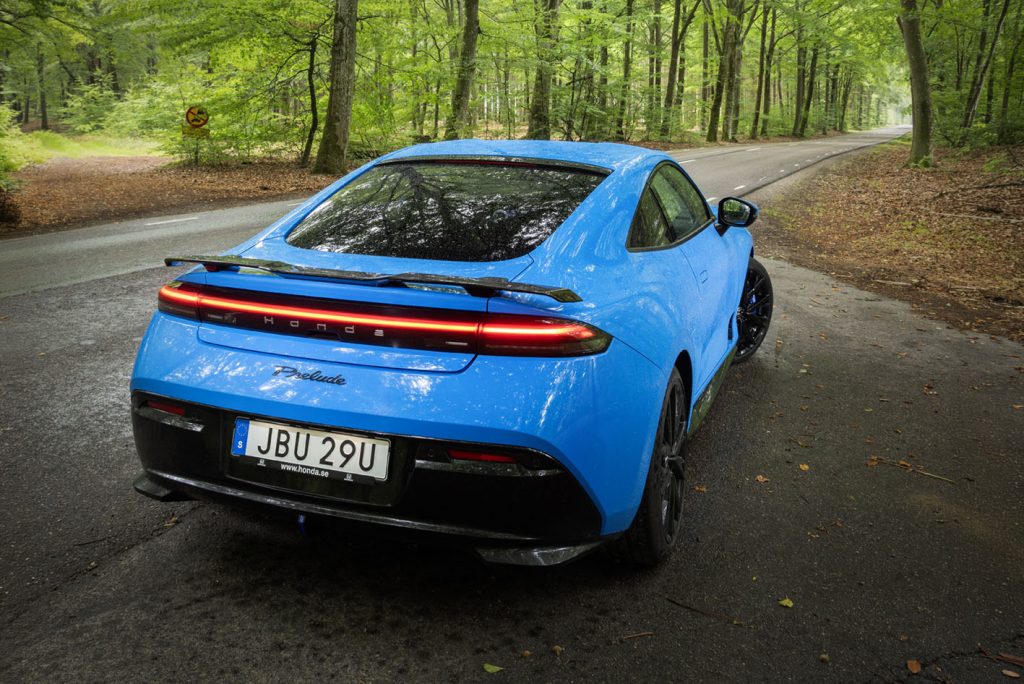
Honda Prelude, a name with history
The first Honda Prelude was introduced in 1978. Over five generations, the model evolved into one of Honda’s technological showcases. The Prelude was used over the years to introduce new technology and became known for its four-wheel drive system 4WS, among other things. The fifth generation was the last before the Prelude disappeared. Now the name is back in the sixth generation, developed as a hybrid sports car for a completely different era.
Interestingly enough, according to Honda, the project didn’t even start as a new Prelude. The developers worked on the idea of what a modern hybrid sports car could look like. It wasn’t until later that they decided that Prelude was the right name for the car. I think that’s an important detail. This isn’t just an old model name that was plucked from the archives to create attention.
Under the hood is Honda's e:HEV system With a two-liter gasoline engine and electric motor. The system delivers 184 horsepower and 315 Nm. The battery is at 1.05 kWh and never needs to be connected to a charger. Personally, I really like the fact that Honda has chosen this route. The Prelude is therefore not an electric car and nor is it a plug-in hybrid that needs to be plugged in to charge. The system automatically manages the interaction between the gasoline engine, electric motor and battery. The result is not a car that is trying to win a horsepower war. It doesn’t need to do that either.
It's about how it feels
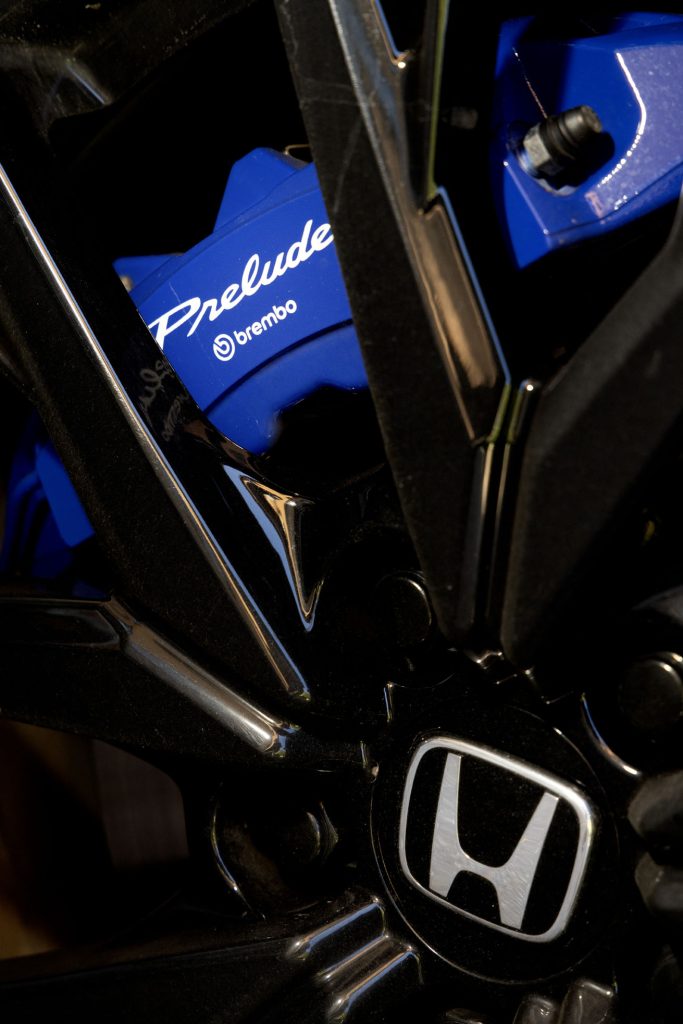
Prelude is not Civic Type R And it shouldn’t be either, but the kinship is there. Honda has taken technology from the Civic Type R to the chassis and the car has adaptive shock absorbers. It’s on 19-inch wheels and the rear of the front wheels are fitted with Brembo brakes. This is especially noticeable when the road starts to curve. This is where I really started to like the car. The Prelude feels compact and well positioned, the steering is precise and the car has a very nice balance through the corners. It encourages you to keep driving when the road gets a bit rougher.
I didn't really miss any more power. It's easy to be blind to numbers in an age when even ordinary family cars can have 400 or 500 horsepower, but driving pleasure isn't measured solely by the acceleration from zero to 100. The Prelude is a good example of that. It's simply incredibly fun to drive. Honda has a long tradition of building cars where driving pleasure is at the center, something I've previously experienced behind the wheel of both the Civic Type R and the NSX. NSX.
For the Honda Prelude, something quite interesting has been developed with S+ Shift. The hybrid system does not have a traditional eight-speed gearbox. Instead, the system simulates eight gears and combines them with changes in engine speed, sound, and response. With the paddles behind the steering wheel, the driver can themselves influence the virtual shifts. It sounds like a gimmick, but behind the wheel it works significantly better than I had expected. It does not, of course, change what the drivetrain actually is, but it gives the driver something more to interact with and contributes to the feeling of driving the car. There are Comfort, GT, and Sport, as well as Individual, where several of the car’s settings can be adjusted.
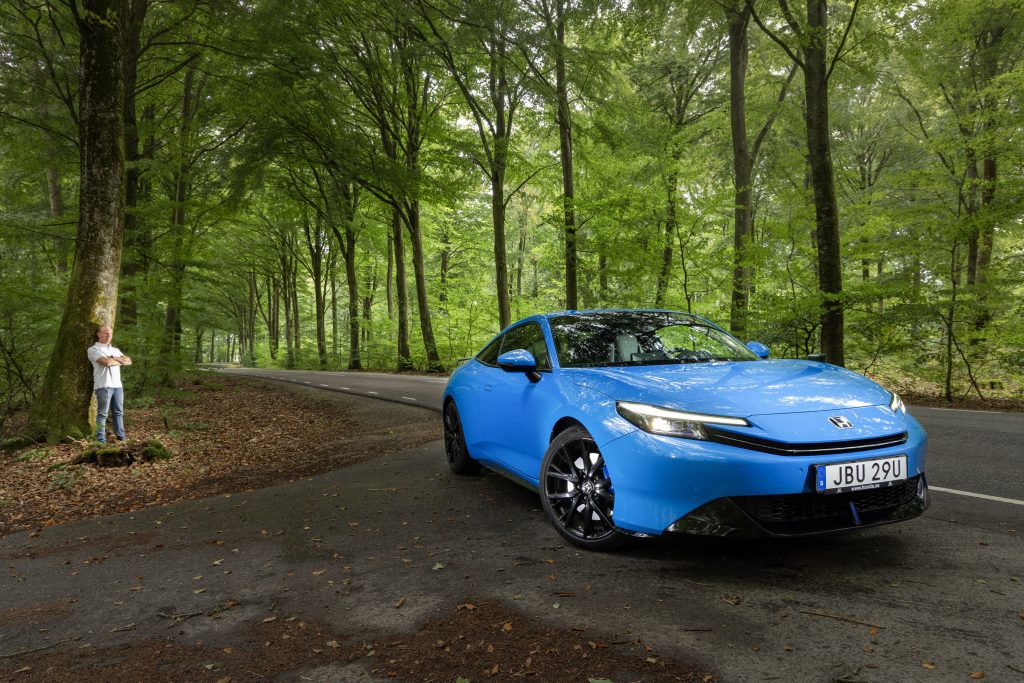
Then there’s the shape. The Honda Prelude is 4,525 millimeters long, 1,880 millimeters wide and only 1,349 millimeters high. These are proportions that we unfortunately don’t see very often anymore. It’s low and wide with a long, sweeping roofline and I also find that the car works even better in reality than in the photos.
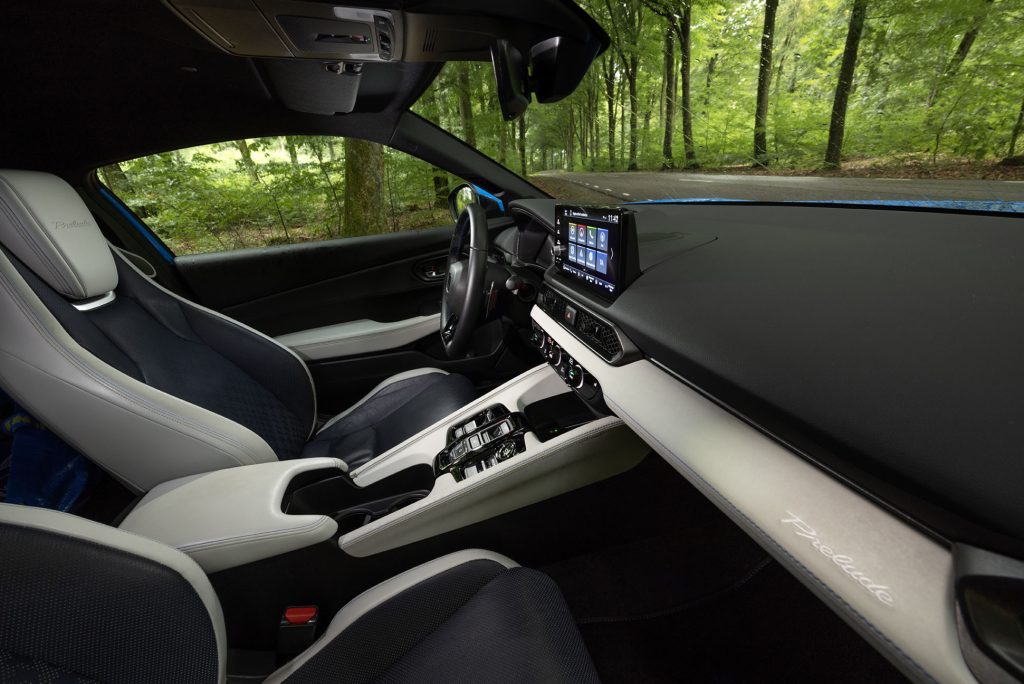
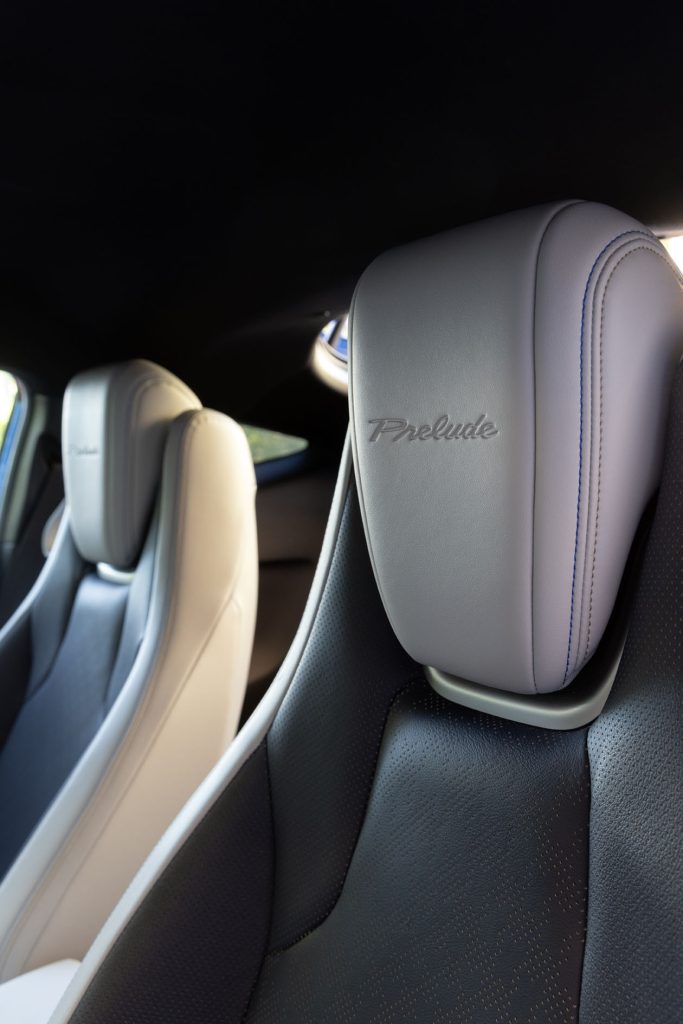
The interior continues on the same theme. The driver's seat is relatively clean and easy to understand, and thankfully Honda hasn't moved everything onto the touchscreen. In front of the driver sits a 10.2-inch digital display, and in the center of the dashboard is a 9-inch Honda Connect screen. The Bose system with eight speakers, wireless Apple CarPlay and Android Auto is included. The seats are also really nice. The bright details, the blue stitching and the embroidered Prelude name make the cabin feel special without being overdone. That's perhaps exactly what I like about the whole car. It doesn't try to be too much.
But then there were the security systems
Here we come to my major objection. Just like many other modern cars, the Prelude has an extensive set of driver assistance and warning systems. The basic idea is of course good. The problem is how it works in reality. In my experience, driver monitoring is far too sensitive. It could be enough for me to look away from the road to, for example, change the temperature of the air conditioning to have the car react and tell me to keep my attention on the road.
And that's not good.
A system whose purpose is to reduce distraction must not itself become a distraction. What is even more annoying is that the warnings I don’t want activated reappear the next time the car is started. To turn them off again, the car must be stationary and I have to enter the car’s menus. Therefore, the same procedure has to be repeated every time the car is started.
I understand why the systems exist and several of the functions are part of the safety requirements that today's cars must comply with. But from the driver's seat, that doesn't change the problem. When a safety system starts to annoy the driver so much that attention instead turns to how to silence the car, in my opinion, you have gotten it wrong.
It would also be a shame if that criticism overshadowed the rest of the car, because the new Honda Prelude is basically a car I really like. It doesn’t have enormous amounts of power. It doesn’t run solely on batteries. It’s not trying to be an SUV, crossover, or anything else other than what it really is. A coupe. A relatively compact one at that, with a really good chassis, fine handling, and enough power to be fun to drive on the right track.
Honda states a consumption of 5.2 liters per 100 kilometers according to the WLTP and a CO₂ emission of 117 grams per kilometer. The Swedish Prelude is sold in the Advance version and costs from 579,900 kronor. It’s not cheap, but I’m very happy that Honda built it. Because in a car world that is becoming increasingly homogeneous, the new Prelude actually feels a little different. And sometimes 184 horsepower is quite enough.
Technical information – Honda Prelude e:HEV
Price: from 579,900 kronor
Engine: 2.0-liter gasoline engine and electric motor, full hybrid e:HEV
Effect: 184 hp
Torque 315 Nm
Gearbox Automatic i-MMD hybrid powertrain with Honda S+ Shift
Top speed: 188 km/h
Battery: 1.05 kWh
Consumption: 5.2 l/100 km, WLTP combined driving
CO₂ emissions: 117 g/km, WLTP mixed driving
Weight: 1 545 kg net weight
Dimensions (length/width/height): 4,525 / 1,880 / 1,349 mm

 English (UK)
  Svenska
Leave a Reply