
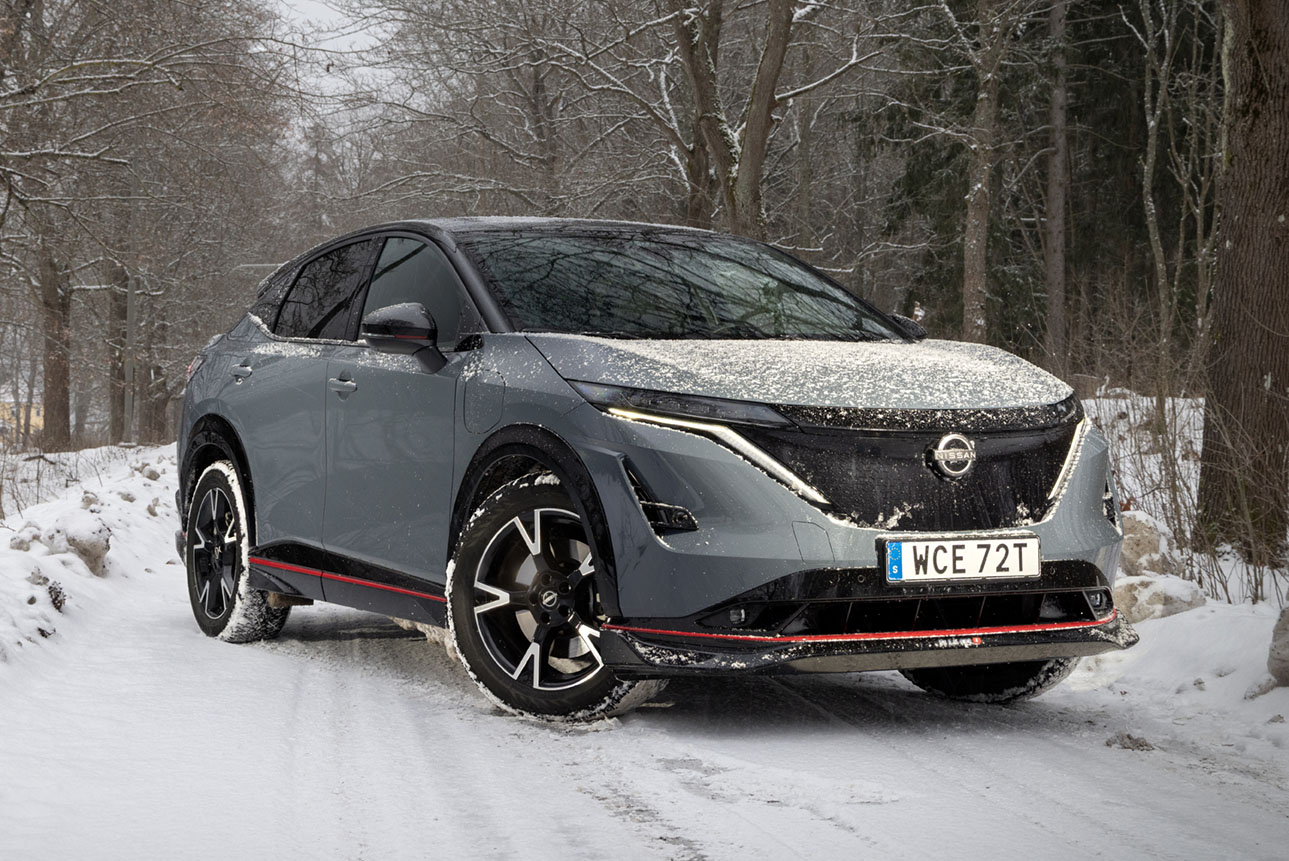
To start off honestly, I took the Nissan Ariya Nismo out at completely the wrong time of year. This is a car built to be playful, potent and engaging, and those qualities simply don't come into their own when the surface consists of shiny ice, snowy mud and winter roads. Sure, you can have fun even then, but to really understand the car you need dry tarmac and a bit of warmth in both tyres and road. Therefore, this should be seen as a first impression. A fairer test will have to wait until spring.
Ariya as a platform
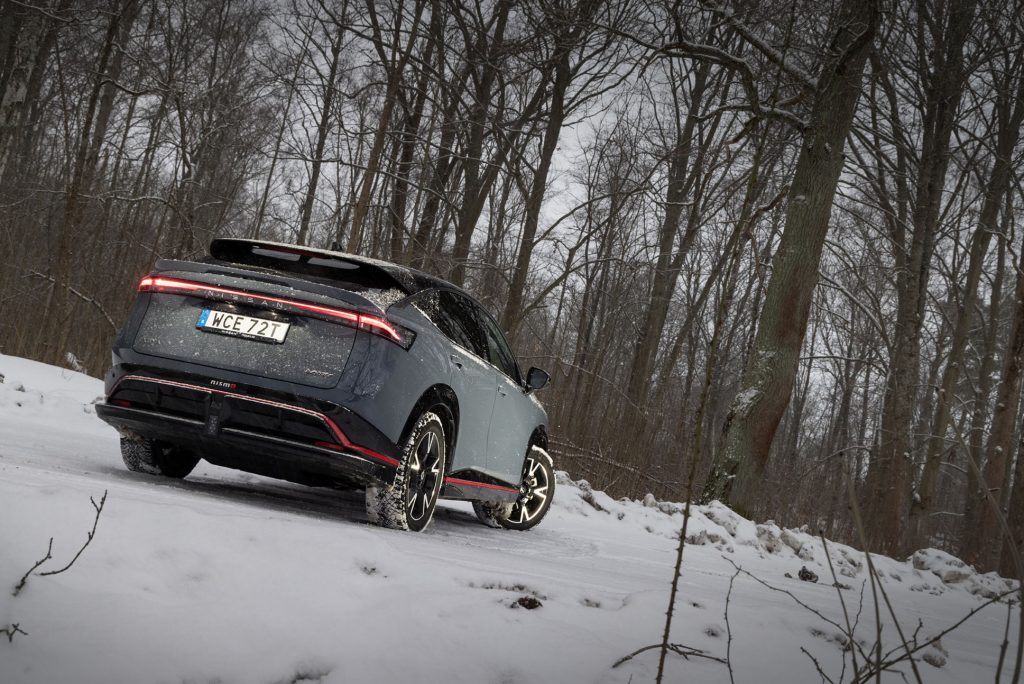
The Nissan Ariya marked a clear step forward for Nissan when it was launched. It was the company's first all-new electric vehicle platform after the Leaf, built on the CMF-EV architecture jointly developed within the Renault-Nissan-Mitsubishi alliance. It focuses on a low centre of gravity, a long wheelbase and a completely flat floor, providing both spaciousness and stable handling.
The Nismo version takes this a step further. Ariya Nismo is four-wheel drive with dual electric motors and delivers up to around 430 horsepower depending on the market. Power is distributed via a further developed e-4ORCE system that works with extremely fast adjustments of torque between the front and rear axles and between the wheels. The result is a car that, on paper, combines high performance with stability and precision.
What does Nismo stand for?
Nismo is Nissan's performance and motorsport division, founded in 1984 through a merger of several racing divisions. The name stands for Nissan Motorsport and is to Nissan what BMW M is to BMW, Audi RS to Audi and AMG to Mercedes-Benz. It's not just about more power, but a holistic approach to chassis, steering, aerodynamics and driving feel.
Historically, Nismo has been deeply involved in everything from Group C racing and Super GT to Le Mans projects and legendary GT-R models. So the application of Nismo to an electric car such as Ariya is a clear sign of how Nissan sees the future of performance. Electric power instead of an internal combustion engine, but with the same philosophy of responsiveness and control.
Nissan Juke Nismo - my first Nismo experience
Nissan's choice of Juke as the first Nismo model in Europe was a brave decision even then. As with the question of the bumblebee's ability to fly, it was questionable whether driving pleasure really belonged in a small, oddly designed compact SUV. But on the stunning roads around Montserrat, outside Barcelona, Nissan showed that the Nismo was not about car type or size, but about attitude.
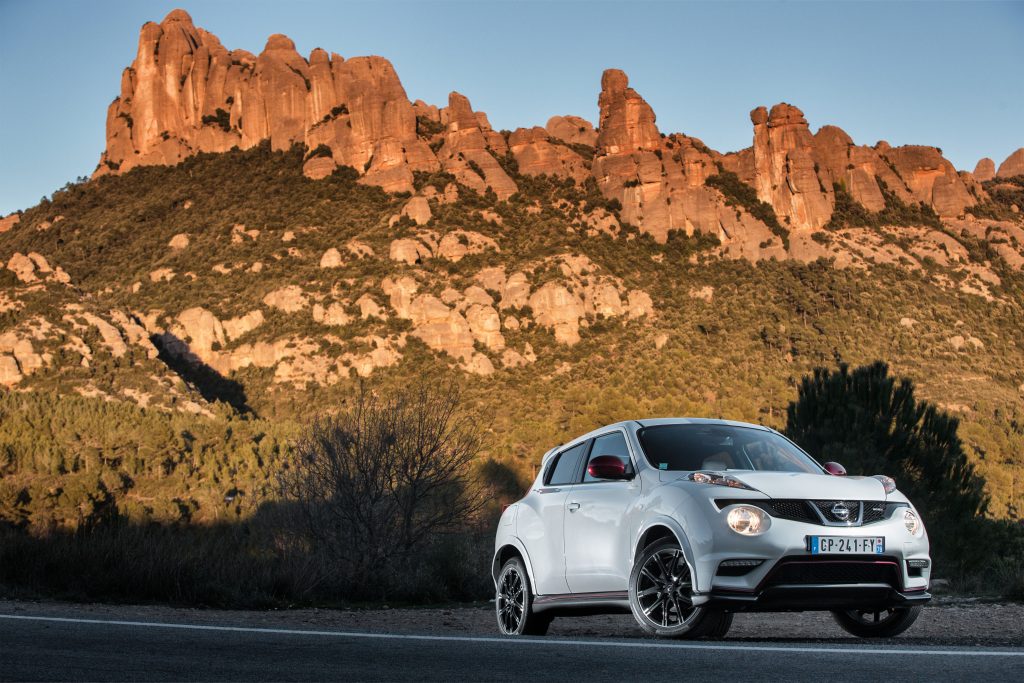
For my part, I have returned to Montserrat many times over the years in connection with various international test drives, most recently just last autumn with Cadillac OPTIQ. Winding mountain roads with perfect tarmac are a reminder time and time again of how the right chassis adjustments, steering and engine response can fundamentally change a car.In early 2013, I was invited to Spain for the international press drive of the Nissan Juke Nismo. It was the first time I really got to experience what Nismo actually stood for in practice, long before anyone was even talking about electric performance or four-wheel drive controlled by software. Back then, Nismo was all about internal combustion engines, mechanical grip, chassis balance and a clear ambition to make something far more engaging than the standard version of the car.
Nissan's choice of Juke as the first Nismo model in Europe was a brave decision even then. As with the question of the bumblebee's ability to fly, it was questionable whether driving pleasure really belonged in a small, oddly designed compact SUV. But on the stunning roads around Montserrat, outside Barcelona, Nissan showed that the Nismo was not about car type or size, but about attitude. Winding mountain roads with perfect tarmac quickly became a reminder of how the right chassis tweaks, steering and engine response can fundamentally change a car.
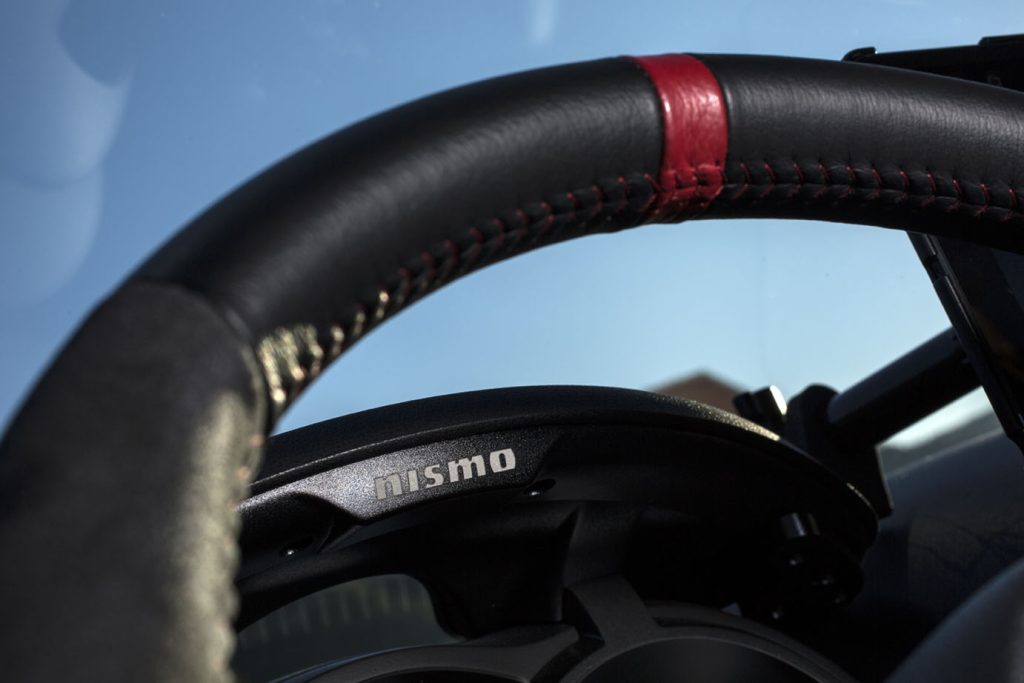
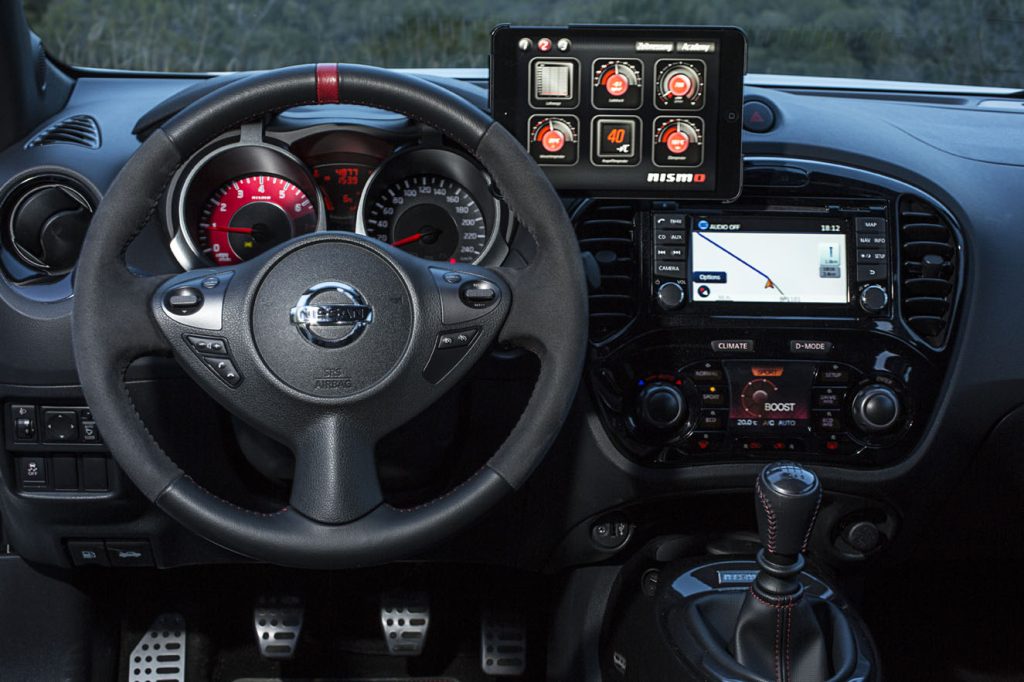
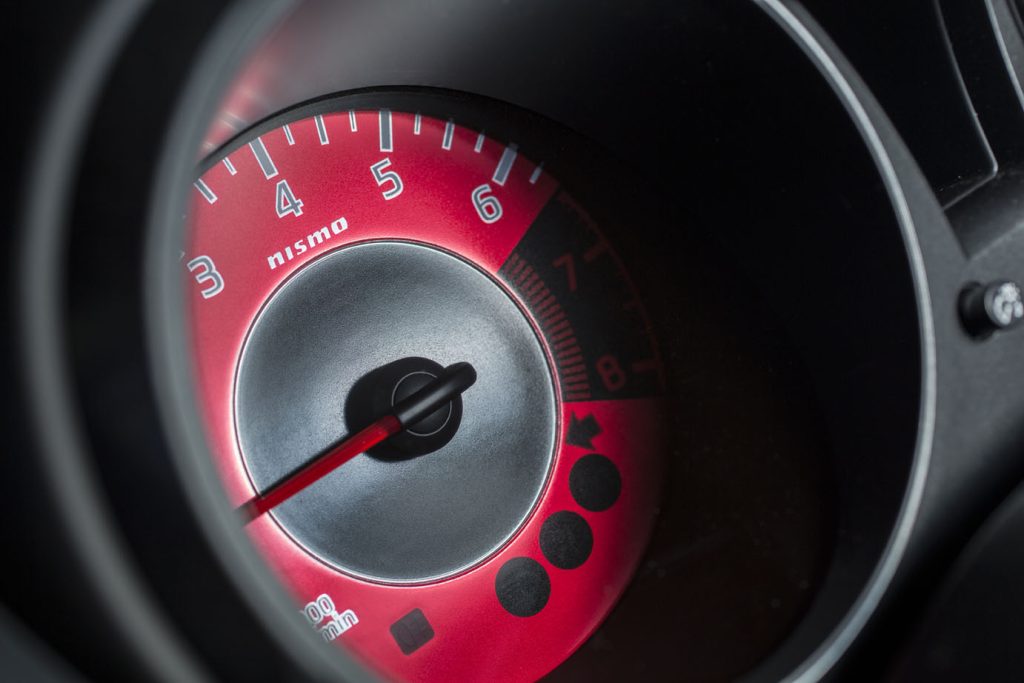
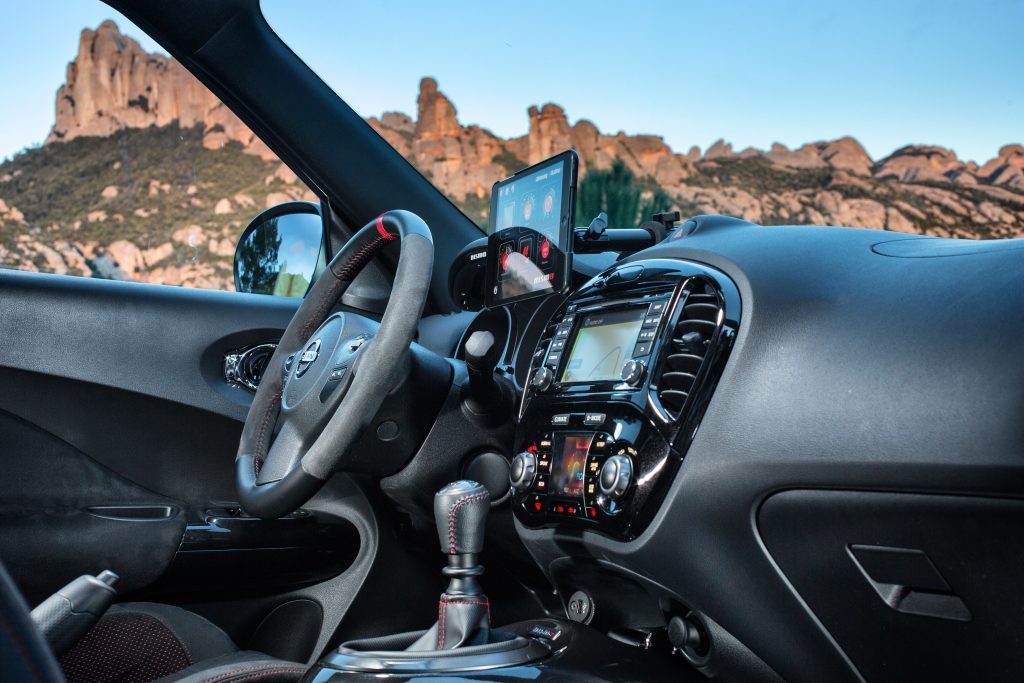
Driving the Ariya Nismo today, over a decade later, it is clear how much has changed technically, but also how the basic philosophy is the same. Back then, it was all about manual transmission, mechanical grip and combustion noise. Today, it's electric motors, instant torque and advanced control systems. But the goal remains the same: to create a car that engages the driver and invites active driving. With Juke Nismo, the foundations were laid for Nismo's return to Europe. Ariya Nismo shows how Nissan is now interpreting the same idea in an electric future.
Driving experience in winter environment
Despite the wrong season, you can sense the car's potential. The Ariya Nismo is fast, very fast, and the power is delivered immediately. Rather, the problem is that winter conditions impose limits long before the car does. When grip is limited, it becomes difficult to experience how the chassis and powertrain really interact.
One feature that stood out, however, is the lane keeping assist. I have driven many cars with similar systems, but in the Ariya Nismo it feels unusually interventionist. The system intervenes forcefully and actively brakes on the side that is considered to be leaving the lane. On dry and warm tarmac this would probably have worked better, but on slippery surfaces I found that the car became rather restless and even started to skid slightly. On several occasions, clear counter-steering was required, even though I did not feel that I was close to leaving the lane. Here I would have liked a smoother calibration or clearer setting options.
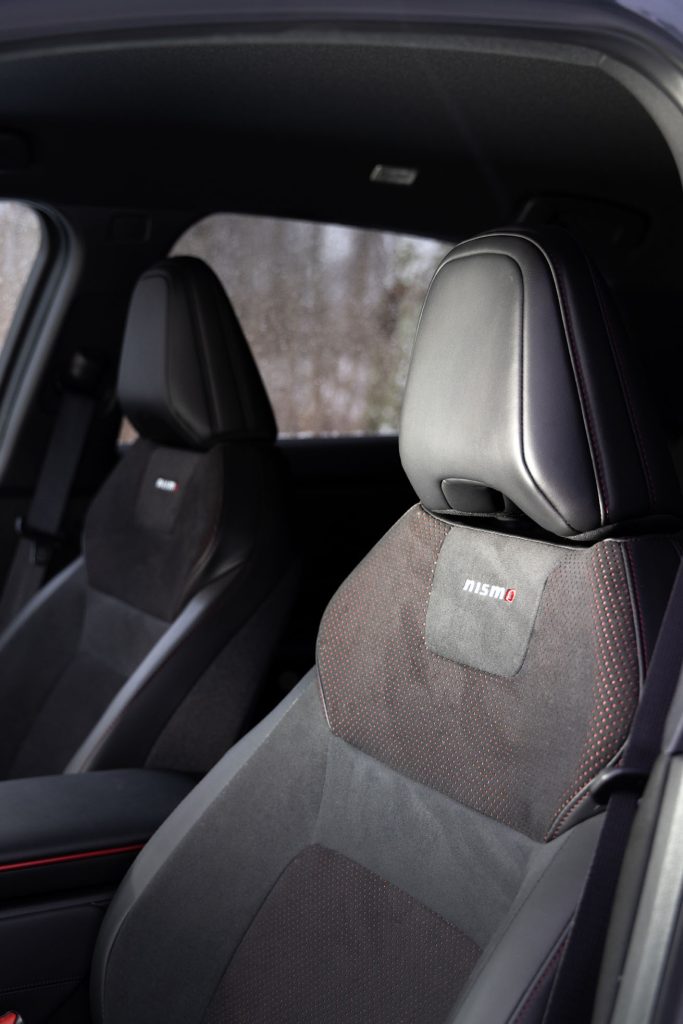
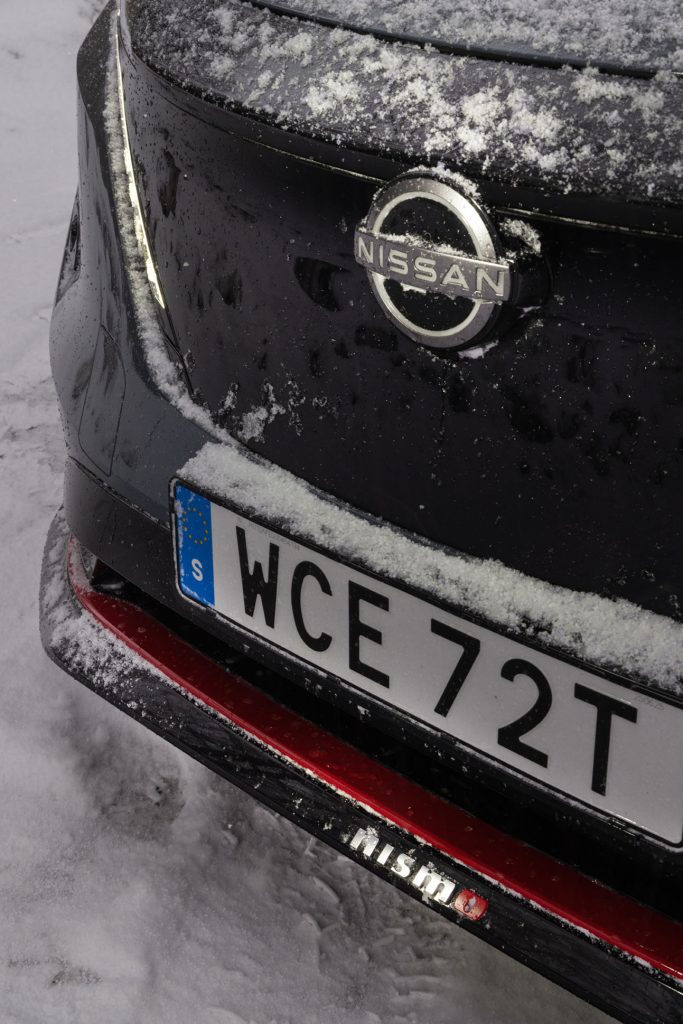
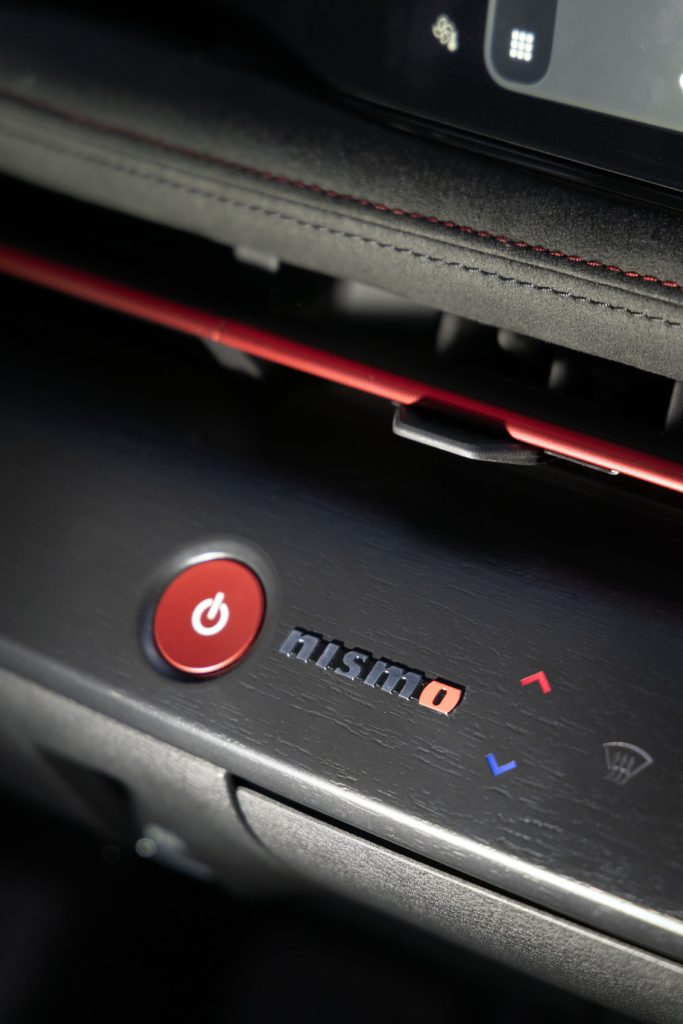
Alert systems and user experience
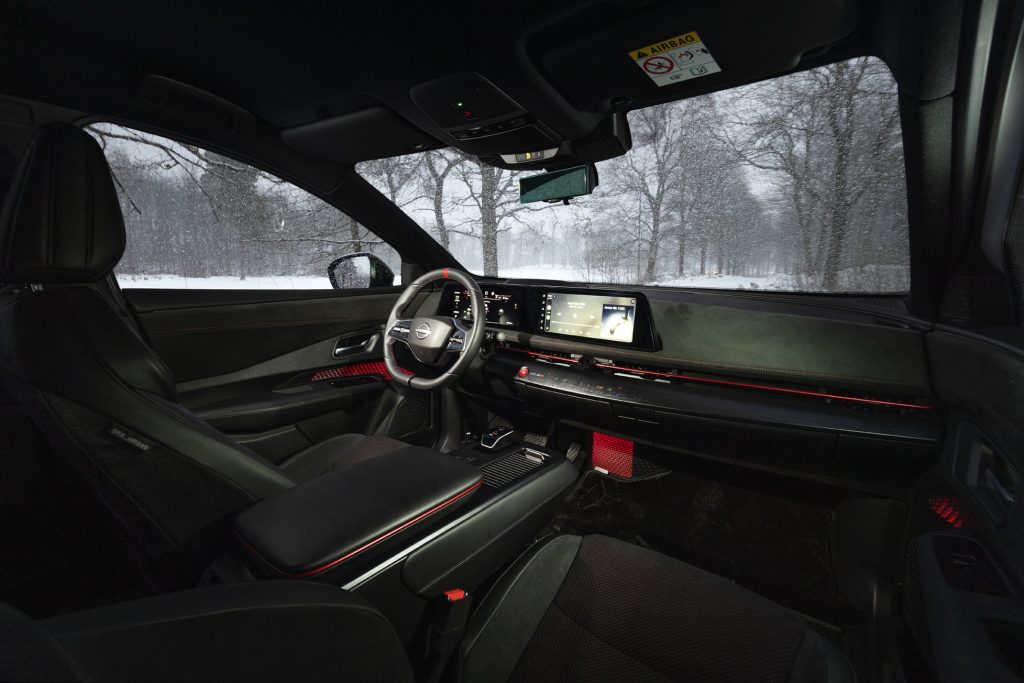
Like all new cars, Ariya Nismo warns you if you are driving above the speed limit. It's not unique to Nissan, but how it's managed differs. In many other cars, the warning can be quickly switched off via a programmable button or shortcut selection. In Ariya Nismo, navigating through menus in the infotainment system is required every time the car is started. It's not dramatic, but it's unnecessarily cumbersome and somewhat detracts from the car's otherwise modern and thoughtful overall feel.
Range and the reality of electric cars
The Ariya Nismo is a performance version and this is reflected in its consumption. When you're driving actively, the car uses a lot of energy, which makes planning extra important. Range anxiety is a term that takes on a different meaning when the battery level drops and chargers are either busy or far away. Unlike a fossil fuel car, there is no quick emergency solution. This is not unique to Ariya Nismo, but it becomes more apparent in a car that encourages driving pleasure.
Executive summary
The Nissan Ariya Nismo is a highly competent and entertaining electric car with clear performance ambition and a heritage that actually means something. The problem is rather that the car deserves better conditions than winter roads to really come into its own.
With the right temperature, the right tyres and dry asphalt, I am convinced that the experience will be completely different. I will be happy to return to Ariya Nismo when spring comes. This is a car that needs to be experienced on its own terms.
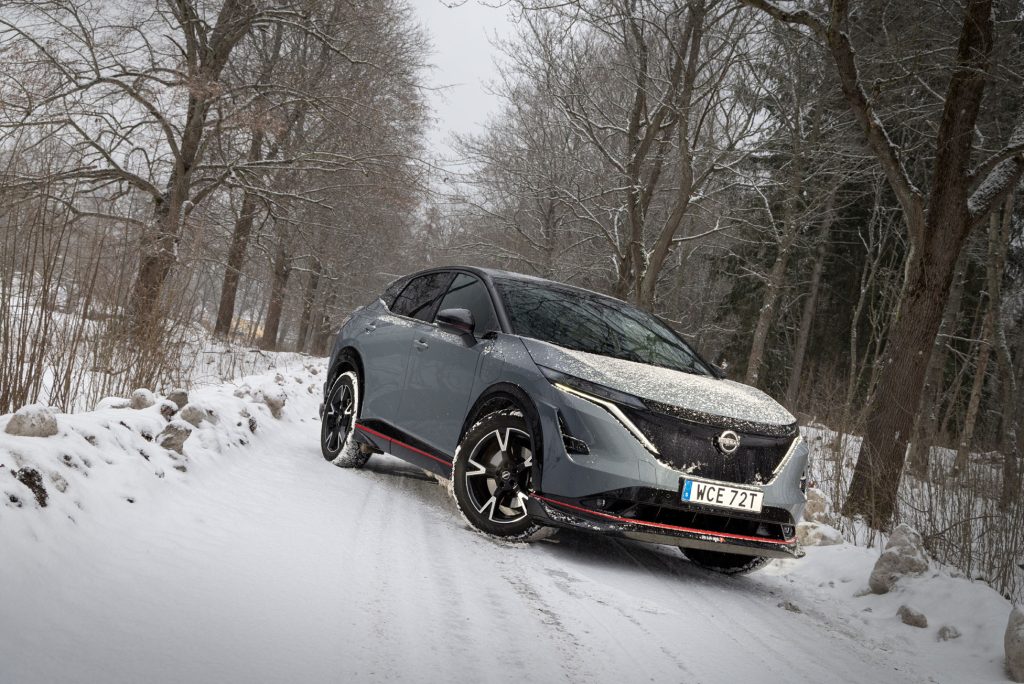
The facts: Nissan Ariya Nismo
Price: from approx. SEK 697 000
Engine: El, dual electric motors
Effect: ca 429 hp, ca 600 Nm
Transmission: Four-wheel drive (e-4ORCE)
Acceleration: 0-100 km/h approx 5,0 s
Top speed: approx. 200 km/h
Consumption (WLTP): approx. 22-24 kWh/100 km (ca 2.2-2.4 kWh/mile)
Range: up to approx. 420 km (WLTP)
Service weight: approx. 2 300 kg
Dimensions (length/width/height): approx. 4 655 / 1 850 / 1 660 mm
 English (UK)
  Svenska
Leave a Reply